3 Practical Methods for Testing Stripe Payments on Your WordPress Website
By Editorial Team |
When customers encounter payment difficulties during checkout, it creates significant challenges for any online business. These issues can harm your reputation, increase cart abandonment rates, and ultimately result in lost revenue.
This makes thorough testing of Stripe payment functionality before launching your store essential. This critical step ensures your payment processing system operates correctly, allowing your online business to grow without technical interruptions.
Many WordPress professionals recommend performing these tests after establishing an e-commerce site. This guide will walk you through the complete testing process with clear, actionable steps.
Continue reading to discover straightforward approaches for testing Stripe payments on your WordPress platform.
The Importance of Testing Stripe Payment Systems
Testing Stripe payments on your WordPress site verifies that all components function properly before your online store becomes publicly accessible. Neglecting this verification could lead to costly consequences.
Consider a scenario where a customer attempts to complete a purchase, but the transaction fails due to configuration problems. This creates frustration for the user and typically results in abandoned sales.
Imagine operating a physical retail location where your point-of-sale system malfunctions. Customers would have no alternative but to leave and visit competing stores.
The customer would likely feel dissatisfied with the experience, and regaining their business would prove challenging. Similarly, overlooking payment system testing can significantly impact your online store's performance.
The positive aspect is that by thoroughly testing your payment infrastructure before going live, you can identify and resolve potential issues early. This proactive approach helps prevent revenue loss and protects your business reputation.
You can simulate various transaction scenarios, including successful payments, declined transactions, and refund processes, to observe how your payment gateway responds under different conditions.
When you're equipped to manage diverse situations, you gain confidence that your Stripe integration is secure and properly configured.
With this foundation established, let's examine practical methods for testing Stripe payments within WordPress. This tutorial covers multiple approaches, and you can navigate directly to your preferred method using the links below.
- Method 1: Testing Stripe Payments in WooCommerce
- Method 2: Testing Stripe Payments for Digital Products
- Method 3: Testing Stripe Payments on WordPress Payment Forms
- Bonus: Recommendations for Using Stripe in WordPress
- Common Questions About Testing Stripe Payments
Method 1: Testing Stripe Payments in WooCommerce
Stripe stands as one of the most widely used payment gateways for processing credit card transactions in WooCommerce-based online stores. If you operate a WooCommerce store, this approach will suit your needs.
Professional Recommendation: If you haven't established your store yet, consult comprehensive WooCommerce setup guides available from various sources.
Once your WooCommerce store is configured and operational, you'll need to install and activate the free Stripe Payment Gateway for WooCommerce extension. Detailed installation instructions can be found in standard WordPress plugin installation guides.
This extension originates from the developers behind FunnelKit, a comprehensive suite of tools designed to help build effective sales funnels and automate marketing processes.
After activating the extension, simply select the 'Start Onboarding Wizard' button on the Plugins administration page.
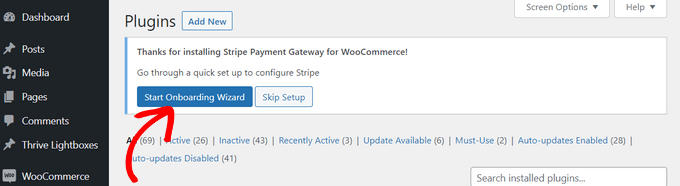
This action launches the FunnelKit configuration wizard on your screen.
Proceed by selecting the 'Connect with Stripe' button to integrate your existing Stripe account with WooCommerce.

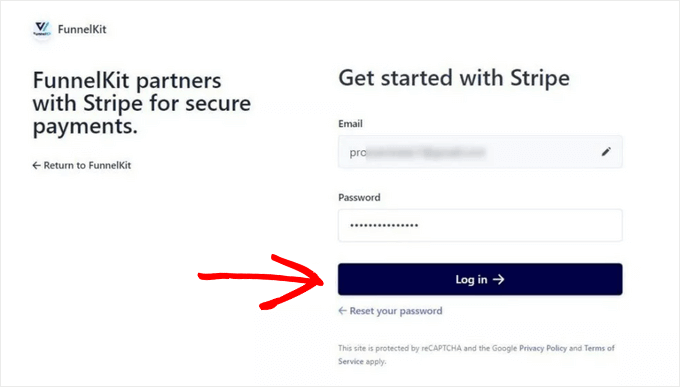
Next, enter the email address and password associated with your Stripe account.
Then, select the 'Log in' button to continue.
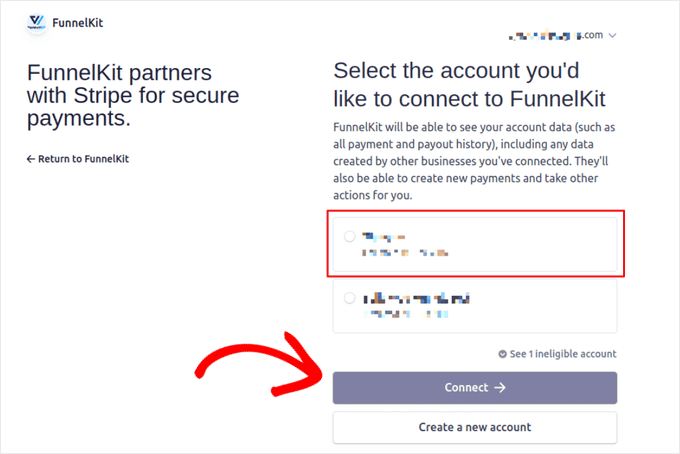
If you've created multiple Stripe accounts using the same email address, choose the specific account you wish to connect with the extension.
After making your selection, click the 'Connect' button.
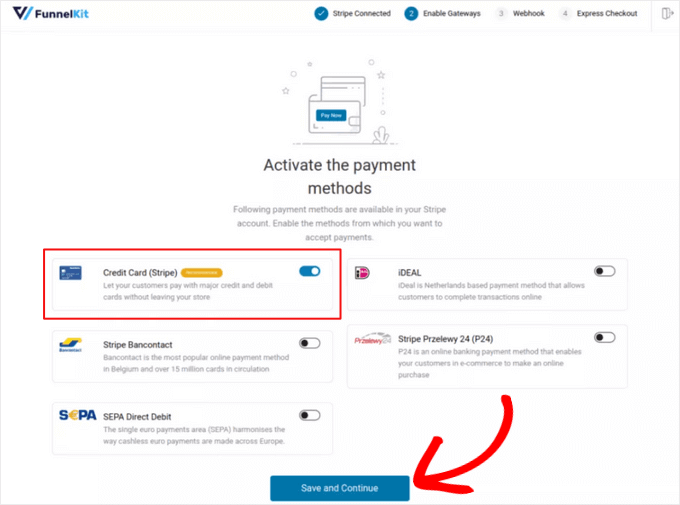
The following screen displays available payment methods you can enable on your store through Stripe. These typically include Card payments, SEPA Direct Debit, iDEAL, and additional options.
Make your preferred selections and click the 'Save and Continue' button.
Once completed, you'll need to configure webhooks for your store.
Webhooks represent automated notifications that Stripe sends to your store to confirm events like successful payments, helping maintain accurate order status information.
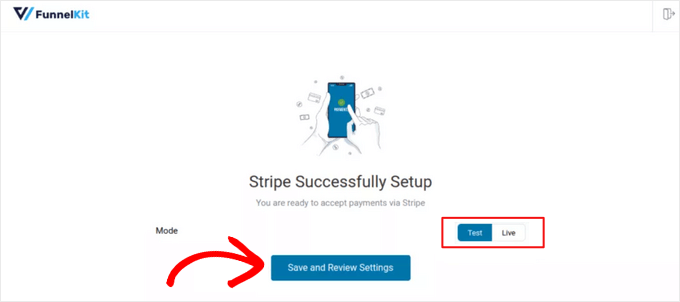
The extension will then prompt you to choose between 'Test' mode and 'Live' mode for Stripe operation. Select the 'Test' option and click the 'Save and Review Settings' button.
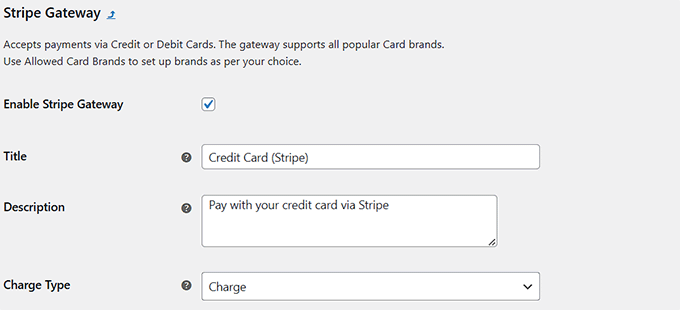
You'll now be redirected to the 'Stripe Settings' page within WooCommerce.
Here, ensure the 'Enable Stripe Gateway' option is checked and provide a title and description for your payment system.
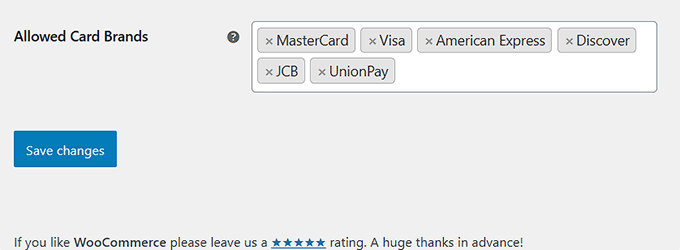
Next, scroll downward and specify the bank cards you plan to accept in your store.
Finally, select the 'Save changes' button to store your configuration.
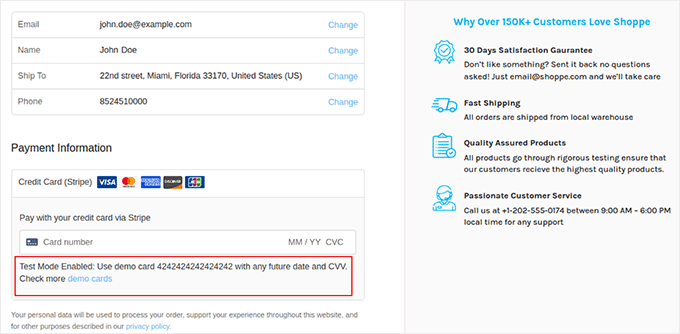
Now, visit your WooCommerce store and navigate to the checkout page. You'll notice that Stripe appears as an available payment option.
A notification will also display, indicating that test mode is currently active on your site.
To test Stripe payments on your WooCommerce store, utilize the demonstration card details provided in the notification message, along with any future expiration date and CVV code.