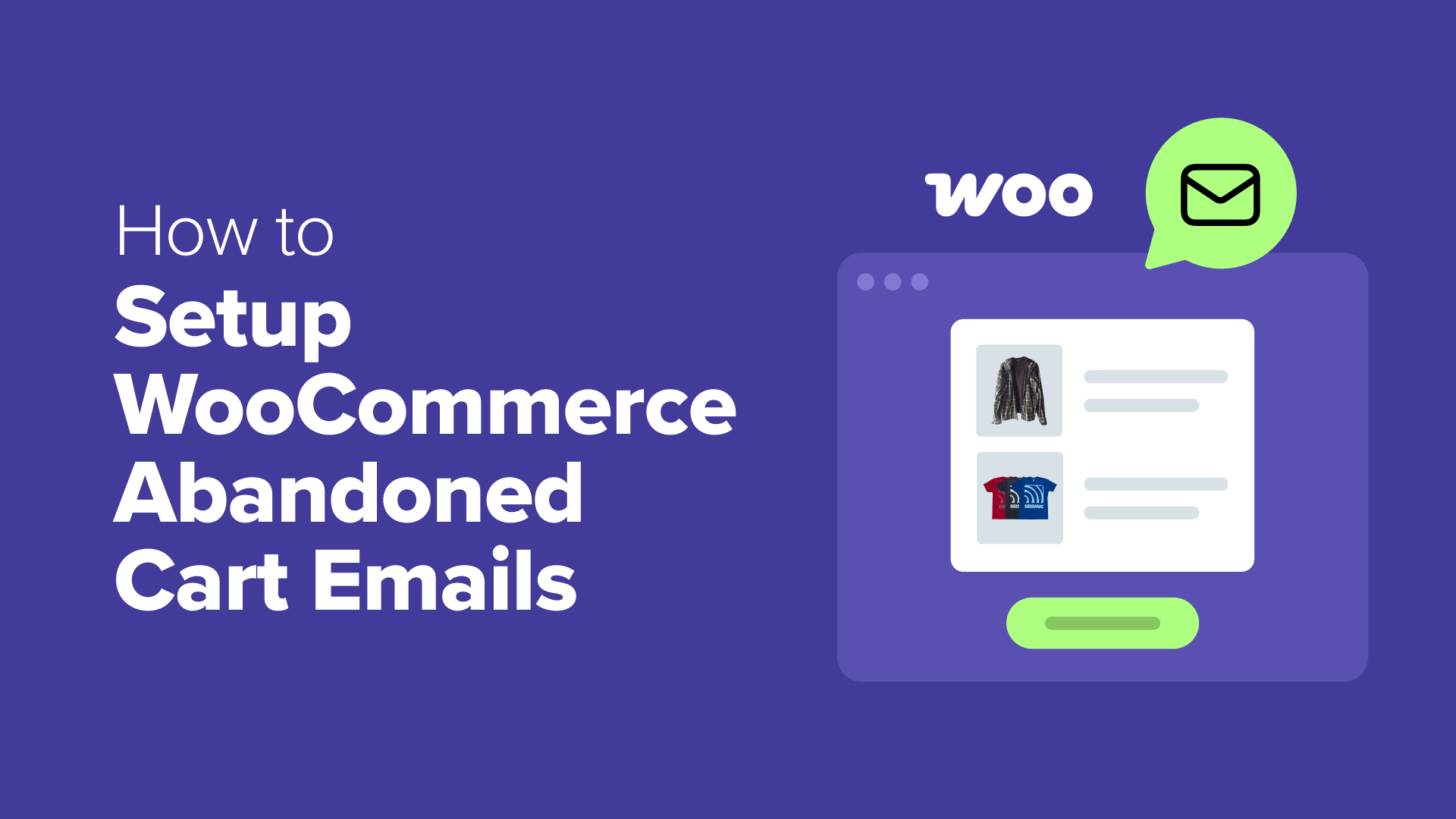
A Practical Guide to Configuring WooCommerce Abandoned Cart Email Sequences
Many online retailers encounter a common scenario: customers add products to their shopping cart, proceed toward checkout, then disappear without finalizing the transaction.
This situation often represents a significant lost sales opportunity, and numerous eCommerce site owners find it particularly frustrating when it occurs repeatedly.
Fortunately, a substantial portion of these abandoned sales can be recovered. A thoughtfully timed, courteous reminder email frequently motivates shoppers to return and complete their orders.
This tutorial demonstrates how to implement abandoned cart email sequences within WooCommerce, including practical examples you can adapt. It represents one of the most straightforward methods to reclaim revenue that might otherwise be lost.
The Value of WooCommerce Abandoned Cart Email Campaigns
Implementing abandoned cart emails enables merchants to recapture sales that would typically be forfeited. When potential customers add items to their cart but exit without purchasing, a strategically scheduled email can encourage them to return and finalize the transaction.
Shopping cart abandonment occurs for various reasons. Sometimes shoppers become distracted and forget their intended purchase. Other times, they may be comparing prices across different retailers or waiting for their next paycheck.
Additional common factors include unexpectedly high shipping costs, complex checkout procedures, and requirements to create an account. An abandoned cart email serves as a helpful reminder about the items left behind and provides a convenient pathway for customers to resume their purchase.
Here are the primary benefits of abandoned cart emails for WooCommerce stores:
- Recover lost revenue without additional advertising expenditure— You're contacting individuals who have already demonstrated interest in your products, making them more likely to convert than unfamiliar prospects.
- Enhance customer relationships through considerate reminders— Many customers genuinely forget about items in their cart, and a polite email demonstrates your commitment to their shopping experience.
- Increase cart recovery rates significantly— Research indicates that abandoned cart emails achieve some of the highest conversion rates because they target "warm" leads already engaged with your business.
- Gain insights about potential checkout issues— If specific products exhibit high abandonment rates, this may indicate problems with pricing, shipping costs, or product descriptions that require attention.
The most advantageous aspect is that abandoned cart emails operate automatically once configured. There's no need to manually monitor who abandoned their cart or send individual messages.
This guide will concentrate on establishing your automated email sequence through detailed, sequential instructions:
- How to Configure WooCommerce Abandoned Cart Emails
- Additional Strategies: Leveraging WooCommerce Automations to Boost Sales
- Common Questions Regarding WooCommerce Abandoned Carts
- Further Resources to Enhance Your WooCommerce Store
Configuring WooCommerce Abandoned Cart Email Sequences
You can efficiently establish automated WooCommerce abandoned cart emails using marketing automation tools designed for eCommerce platforms. These solutions typically feature drag-and-drop builders and pre-configured email sequences, enabling setup within minutes without technical expertise.
During evaluation, many WordPress experts appreciate the ability to design emails from scratch and create workflows without coding knowledge. These tools automatically track abandoned carts and dispatch appropriately timed follow-up messages to recover potentially lost sales.
Step 1: Install Your Automation Plugin and Activate Cart Tracking
Begin by installing and activating your chosen marketing automation plugin for WordPress. For comprehensive installation guidance, consult standard WordPress plugin installation documentation.
After activating the plugin, navigate to its settings page from the WordPress administration sidebar and locate the 'Cart' section in the configuration panel.
Once there, enable the 'Cart Tracking' option. This step is crucial because the automation system cannot monitor abandoned carts without this feature activated.
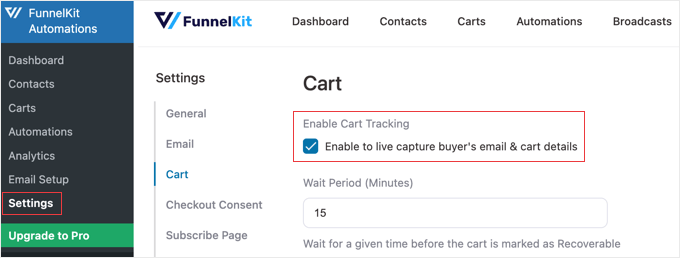
You may also configure additional settings here, including the waiting period before marking a cart as recoverable, email exclusion lists, and privacy compliance options. These settings are particularly important for stores serving customers in regions with strict data protection regulations.
After configuring your preferences, click the 'Save' button to store your changes.
Step 2: Establish the Abandoned Cart Workflow
Next, proceed to the automation section from your WordPress dashboard.
Here, select the 'Create Automation' option typically found at the bottom of the interface.

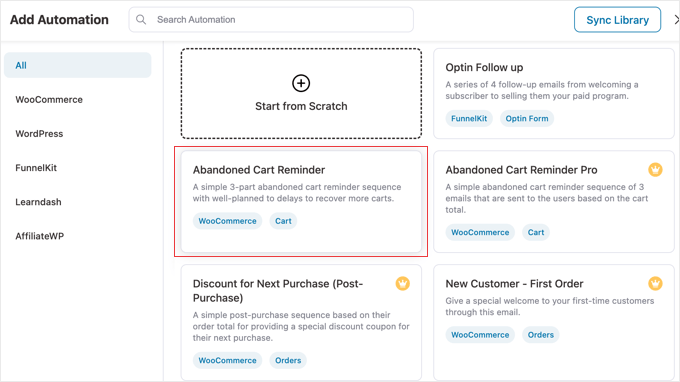
This action will direct you to the automation creation page, where you can choose from pre-designed email templates containing abandoned cart examples and workflows. These templates are typically developed by marketing professionals and feature proven conversion effectiveness.
For this demonstration, we'll select the 'Abandoned Cart Reminder' workflow, which dispatches three sequential emails to users over a specified period. This multi-email approach provides customers multiple opportunities to return and finalize their purchases.
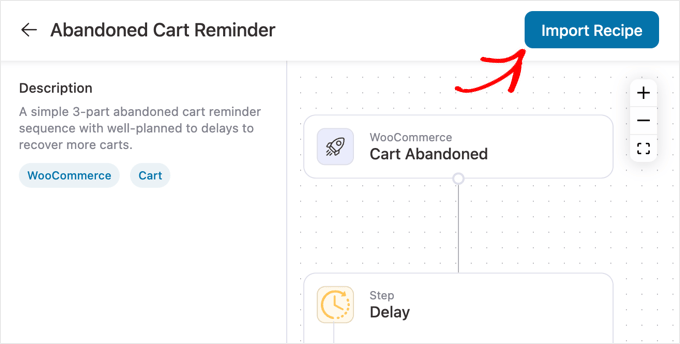
You will now access a new screen displaying the trigger, actions, and timing delays for this workflow. The visual workflow editor simplifies understanding how your automation will function.
Next, click the 'Import Template' button usually located in the upper-right corner. This action loads the pre-built workflow into the editor, transforming it into your customizable automation.
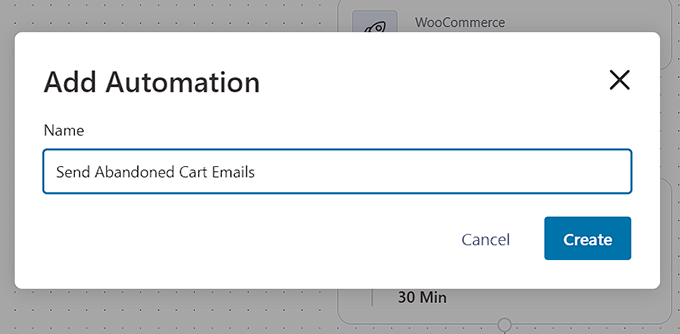
After completing this step, an 'Add Automation' prompt will appear. Here, assign your new workflow a recognizable name, then select the 'Create' button.
Consider using a descriptive title like 'Abandoned Cart Email Sequence' for easy identification later.
The system will now open the template in its automation editor, where you can modify your workflow's trigger, timing delays, and actions.
You can incorporate additional actions and delays by selecting the '+' button. This flexibility allows creation of more sophisticated campaigns as you become more familiar with the tool.
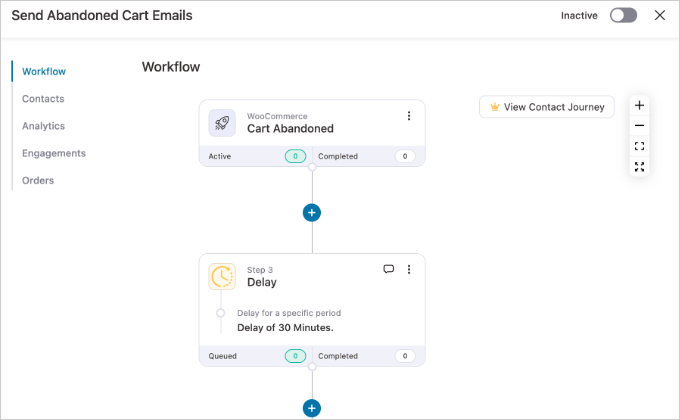
The workflow's trigger is typically pre-configured as 'Cart Abandoned,' so the sequence will commence automatically whenever a shopper exits without completing their purchase.
Step 3: Personalize Your Three-Part Email Sequence
The primary advantage of this template is its creation of a three-part email sequence. Now, customize the timing and content for each message to optimize your sales recovery potential.
The objective involves progressing from a gentle reminder to a final, persuasive offer.