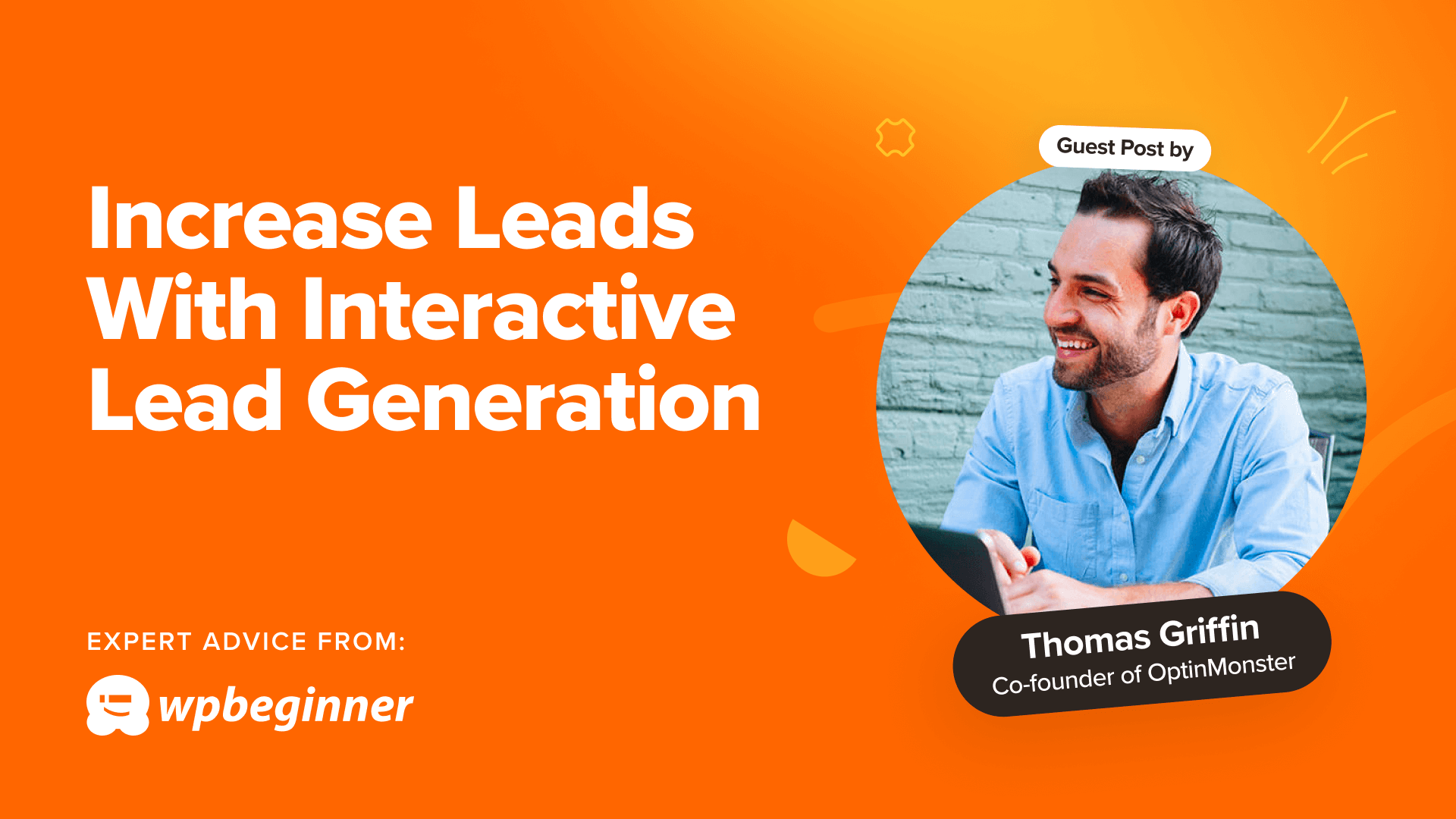
Interactive Lead Generation Strategies to Boost Conversions by 50% or More
By WordPress Expert |
Standard contact forms often fail to capture visitor attention in today's competitive digital landscape. Modern audiences seek engaging, personalized interactions that provide value beyond basic information collection.
Interactive lead generation addresses this need by transforming passive website visits into active participation. This approach builds stronger connections with potential customers and establishes meaningful relationships that extend beyond initial contact.
Consider the difference between reading static content and participating in an interactive experience. Interactive elements capture attention, stimulate curiosity, and encourage extended engagement. When visitors become actively involved with your content, they demonstrate significantly higher conversion potential.
Let's explore proven interactive techniques that can help you develop a dedicated audience eager to engage with your brand.
Depending on your industry and implementation approach, interactive lead generation methods can increase conversion rates by 50% to 300% compared to traditional approaches:
- Quizzes as Effective Lead Generation Tools
- Leveraging Interactive Calculators
- Engaging Through Polls and Surveys
- Gamification for Visitor Engagement
- Attention Capture with Lightbox Popups
- Email List Growth Through Social Media Contests
- Form Simplification via Progressive Profiling
- Webinars as High-Impact Lead Generators
- Interactive Infographics for Data Presentation
- Interactive Lead Magnet Downloads
- 24/7 Lead Generation with Live Chat and Chatbots
- Frequently Asked Questions About Lead Generation
1. Quizzes as Effective Lead Generation Tools
Popular interactive quizzes demonstrate a fundamental truth about human psychology: people enjoy discovering new aspects about themselves. Quizzes engage users by tapping into natural curiosity and the desire for self-discovery.

When presented with a choice between completing a standard form or participating in an engaging quiz that reveals personal insights, most users will select the interactive option. This engagement creates an opportunity to request contact information in exchange for personalized results.
Research indicates well-designed quizzes can achieve lead generation rates approaching 50%. This effectiveness stems from transforming passive website visitors into active participants invested in the outcome.
The most successful quizzes align closely with industry context and audience interests. Consider these approaches:
- Personality assessments that reveal individual traits or preferences, such as "What's Your Leadership Style?" or "Which Creative Approach Suits You Best?"
- Knowledge tests that challenge expertise while fostering friendly competition, like "WordPress Proficiency Assessment" or "Digital Marketing Knowledge Quiz"
- Survey-based quizzes that gather opinions while delivering value, such as "What's Your Ideal Learning Method?" followed by customized educational recommendations
- Compatibility evaluations that help users identify suitable products or services, including "Which Project Management System Fits Your Workflow?"
For instance, educational platforms might offer quizzes helping entrepreneurs identify the most suitable course format for their learning objectives. Participants receive tailored recommendations based on their responses.

2. Leveraging Interactive Calculators
Daily decision-making includes both minor choices and significant considerations that impact business or personal outcomes.
Will this investment deliver expected returns? How much could alternative approaches save? These questions represent common concerns among potential customers.
Interactive calculators prove effective because they convert uncertainty into quantifiable data, providing users with confidence to proceed with decisions.

Rather than simply describing potential benefits, calculators allow users to input specific parameters and receive personalized results. This personalization makes abstract advantages concrete, potentially achieving conversion rates around 40%.
Effective calculators address specific audience concerns rather than offering generic functionality. For example, sustainable product retailers might develop "Environmental Impact Calculators" comparing traditional versus eco-friendly options for environmentally conscious consumers.
Additional calculator applications include:
- Financial service providers offering retirement planning tools, mortgage estimation calculators, and investment return projections
- Healthcare websites implementing symptom assessment tools, wellness tracking calculators, and treatment cost estimators
- Business and marketing platforms creating website traffic projections, social media ROI calculators, and freelance rate estimators
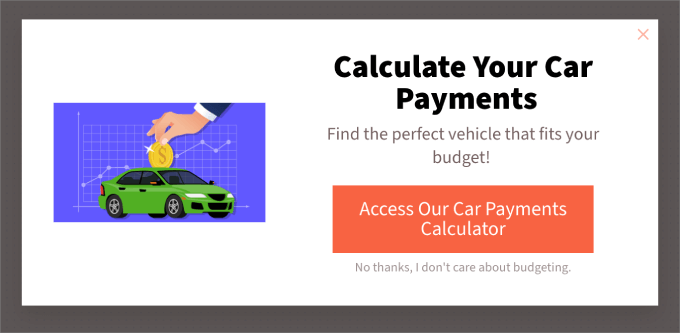
By providing valuable tools that simplify complex decisions, you establish trust and position your brand as a helpful resource, creating foundations for sustained business relationships.
3. Engaging Through Polls and Surveys
Many website owners express frustration about one-way communication with their audience. Polls and surveys effectively transform monologues into dialogues by inviting audience participation.
People generally appreciate opportunities to share opinions, particularly when they believe their input receives genuine consideration. Incorporating polls and surveys demonstrates respect for audience perspectives while gathering valuable insights.
The strategic value extends beyond data collection to marketing optimization. These tools enable you to:
- Understand content preferences by identifying topics of interest, unanswered questions, and preferred content formats
- Enhance user experience by soliciting feedback about website design, navigation systems, or purchasing processes
- Refine products and services by discovering popular features, desired improvements, and potential new offerings
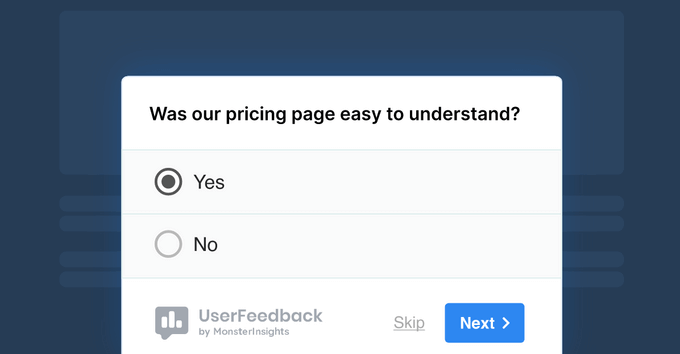
Technical expertise isn't required for implementing polls and surveys on WordPress platforms. Numerous user-friendly plugins enable quick setup without compromising website performance.
4. Gamification for Visitor Engagement
Traditional lead generation processes often feel burdensome without engaging elements. Gamification introduces enjoyable interactions that make brand engagement more appealing.
The psychological appeal of achievement and reward systems drives gamification effectiveness. Incorporating game-like elements encourages specific actions while creating positive brand associations that increase site engagement and return visits.
Effective gamification approaches for landing pages include:
- Interactive reward wheels offering discounts, complimentary items, or exclusive content in exchange for contact information