Strategies to Make Your WordPress Content a Preferred Source for AI Citation
For many years, achieving the top position in Google search results was considered the primary objective for content creators. However, the landscape has shifted with the emergence of AI-powered search. Today, a crucial goal is to have your articles directly referenced within AI-generated overviews and conversational responses.
AI platforms are increasingly becoming the initial point of contact for information seekers. If your content is not cited as a source within an AI-generated answer, you risk missing a significant and growing segment of your potential audience.
This guide outlines a practical approach used by many WordPress experts to structure content that becomes a trusted, citable resource for AI tools. You will learn how to format your articles to be recognized as definitive sources.
The following topics will be covered in this guide:
- The Evolution of SEO: The Importance of AI Citations
- How AI Tools Evaluate and Select Content for Citation
- Part 1: Crafting Content That is Conducive to Citation
- Part 2: Effective Structuring Using the WordPress Block Editor
- Part 3: Demonstrating Authority and Expertise (E-E-A-T)
- Part 4: Essential Plugins and Technical Configurations
- Part 5: Measuring the Success of Your Citation Strategy
- Frequently Asked Questions Regarding AI Citations
- Further Reading on SEO and GEO
The Evolution of SEO: The Importance of AI Citations
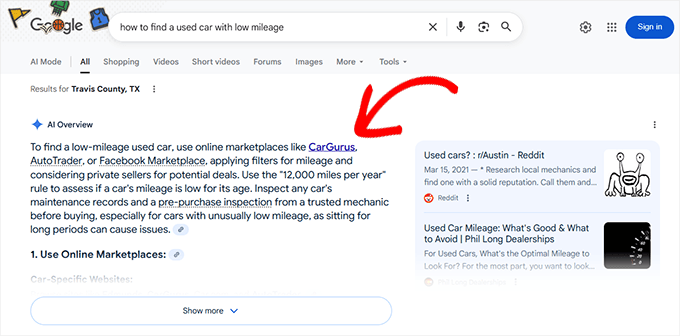
When you pose a question to a search engine and receive a detailed summary at the top of the results, that is an AI Overview. An AI Citation occurs when your website is acknowledged as the source within that answer, accompanied by a direct link to your content.
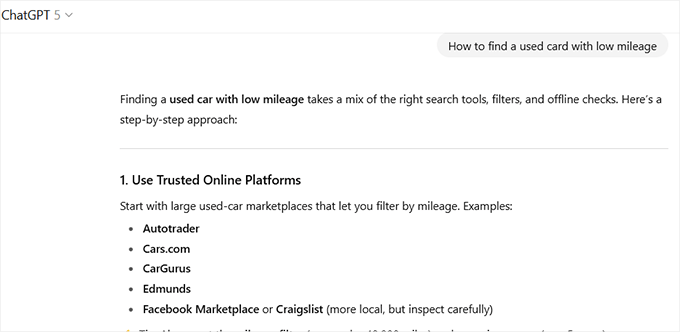
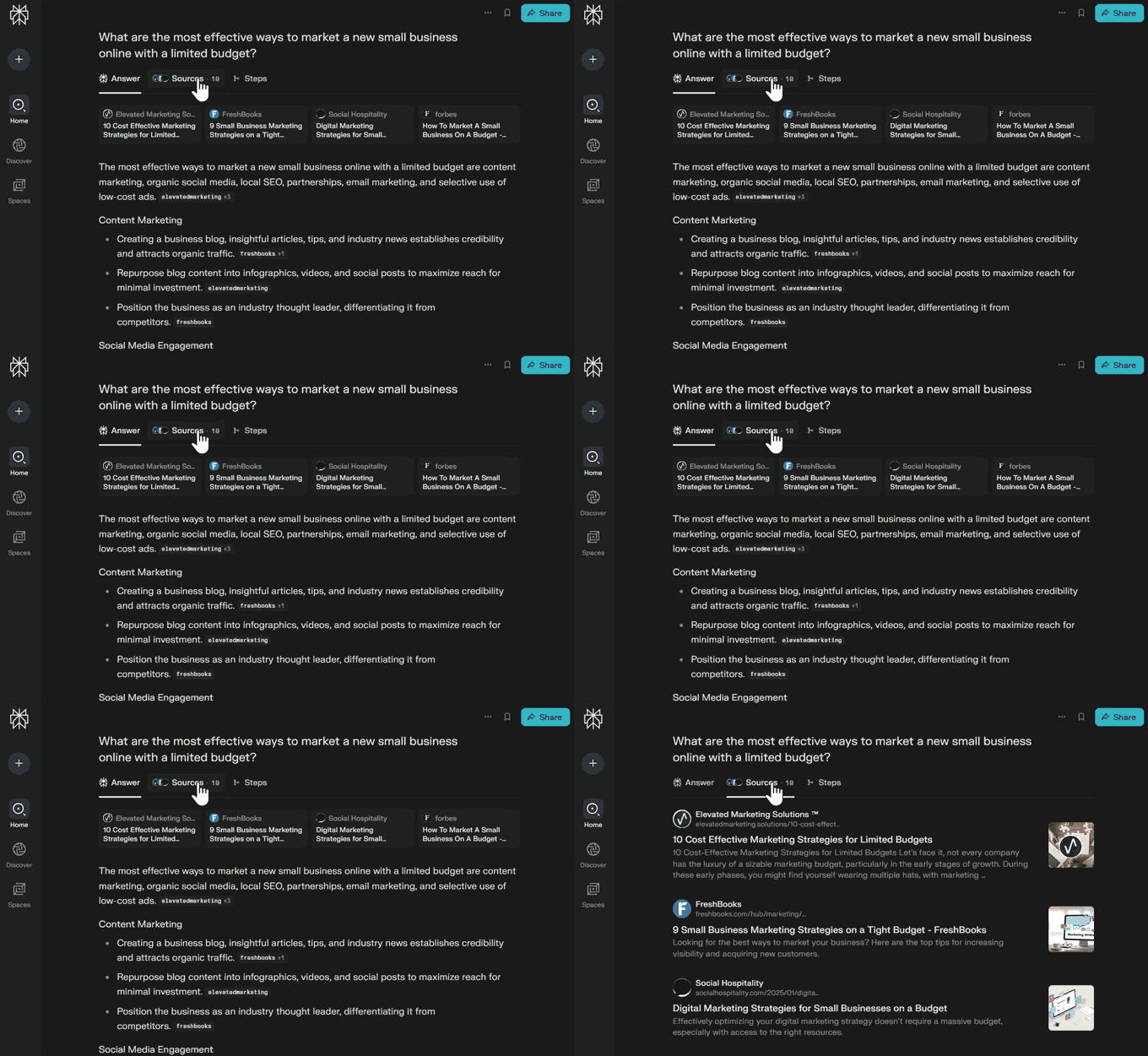
A similar process takes place within leading AI platforms like ChatGPT, Perplexity, and Claude.
Users are directing queries to these tools that they previously entered into search engines, and they are now receiving direct answers.
The objective is for your content or business to be presented as that definitive answer.
Consider it as an AI research assistant pointing to your site and stating, "This is a credible source." Without a citation, a growing portion of your target audience may remain unaware of your existence.
Why This Represents a Critical Growth Strategy
Optimizing for AI is not merely a passing trend. It represents a direct route to increased authority and improved traffic.
Here are the key reasons it is essential:
- Become the Direct Answer. AI Overviews now appear in a significant percentage of Google searches. A citation places you directly within the answer itself, rather than just on a list of links below it.
- Establish Immediate Authority. A citation serves as a strong endorsement from search engines and AI platforms, signaling to users that you are a verified expert source.
- Recapture Diminishing Clicks. AI-generated answers can reduce the number of clicks to traditional websites. A citation is a method to reclaim that traffic from highly motivated users.
- Attract Higher-Quality Visitors. Traffic originating from a citation is not random. These users have already reviewed a summary and are clicking specifically to access your deeper expertise.
In summary, securing citations from AI has become a new benchmark for demonstrating authority online. It is how you succeed in an environment where search engines do not merely locate information but provide direct answers.
How AI Tools Evaluate and Select Content for Citation
To earn a citation, you must first comprehend how AI processes content. It can be likened to an assistant scanning a document for key facts, headings, and data tables, rather than someone reading a novel for enjoyment.
The AI seeks specific signals that confirm your content is reliable and easy to parse. It is not solely about ranking first on Google. It is about being the most clear and authoritative source among the top results.
AI looks for the following elements:
- Direct Answers: Clear and concise responses to specific questions.
- Structured Data: Information organized using lists, tables, and schema markup.
- Trust Signals: Author biographies, recent update dates, and links to other authoritative sources.
- Verifiable Facts: Original data, statistics, or benchmarks that can be easily attributed.
AI also operates by identifying 'entities.' An entity is a distinct 'thing' such as a person, a product (like WordPress), or a concept (like SEO). Your task is to define these entities clearly so the AI can accurately understand the subject of your content.
Part 1: Crafting Content That is Conducive to Citation
Earning citations from AI tools begins with your choice of words. Your writing must be easily digestible for a machine to analyze and extract quotes from.
Based on experience, this requires prioritizing clarity and directness above all other considerations. This approach also benefits human readers by providing quick answers in an easily understandable format.
Apply the 'Answer First' Principle
You should consistently present the main answer or a summary immediately after the introduction of your article.
Many experienced developers place this within a styled "Key Takeaways" or "Summary" box. This provides both readers and AI with a quick, digestible overview of the article's most critical points.
Here is an example of how the answer-first approach can be implemented on a website:
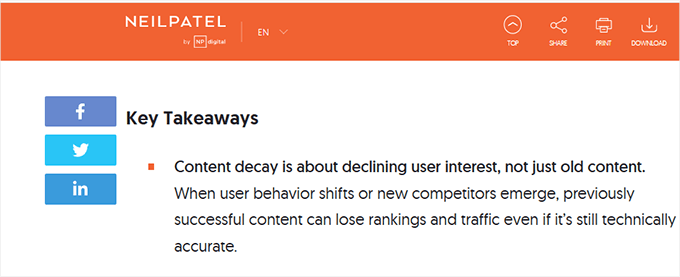
Why this is effective: AI models are designed for efficiency. They scan content for the most relevant information to address a user's query.
If you place your conclusion at the end, you force the AI to process the entire article, increasing the likelihood it will pull a quote from a competitor who answered the question upfront.
For example: A contractor writing about "How Much Does a Deck Cost?" should provide a direct answer at the beginning.
"On average, a new wood deck costs between $4,000 and $11,000, or approximately $35 per square foot. The final price is influenced by materials and design complexity."
The remainder of the article can then elaborate on those cost factors.
Use Direct and Simple Language
AI responds most effectively to simple, declarative sentences. You should avoid complex phrasing, industry jargon, and passive voice to communicate your point clearly.
Why this is effective: While AI is sophisticated, it processes language literally. Ambiguous or overly verbose sentences can be misinterpreted, causing the AI to misunderstand or overlook the core message.
Direct language following a clear structure is straightforward for a machine to parse and quote accurately.
For example:
Instead of this:"Our company's strategic methodology is centered around the synergistic implementation of customized, client-focused solutions."
Write this:"We develop custom plans to help your business achieve its goals."
Share Original Data and Research
One of the most compelling methods to earn citations is to be the originator of unique information.
When you publish original statistics, survey findings, or benchmarks from your own research, AI has a strong incentive to credit your site as the source.
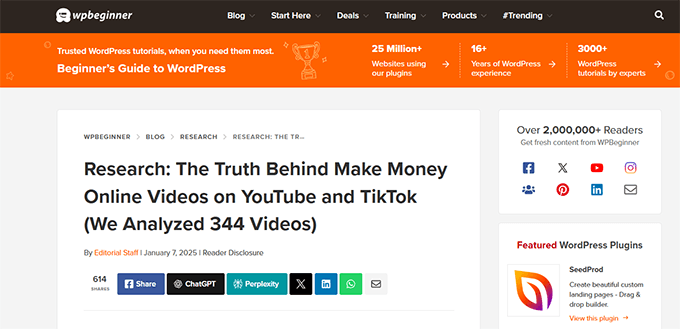
Why this is effective: AI models are built to trace the origin of a fact. If you are the primary source for a specific piece of data, you make your content an essential citation.
This establishes your site as an authoritative reference point.