Secure WordPress Backups to Amazon S3: Free and Premium Methods Explained
Many experienced WordPress developers have found that maintaining reliable website backups is essential for long-term success. A robust backup strategy protects against data loss, security breaches, and unexpected hosting issues.
Amazon S3 has become a preferred backup destination among WordPress professionals due to its reliability, cost-effectiveness, and independence from hosting providers. This cloud storage solution offers enterprise-level security and integrates seamlessly with popular WordPress backup tools.
This guide will walk you through the complete process of configuring WordPress backups to Amazon S3. We'll explore both free and premium approaches that effectively safeguard your website data.
Advantages of Using Amazon S3 for WordPress Backups
Amazon S3 provides several compelling benefits for WordPress backup and restoration workflows:
- Enterprise-Grade Reliability: Consistently handles large backup files, making it suitable for business-critical websites that cannot tolerate backup failures.
- Advanced Security Features: Includes Identity and Access Management (IAM) for precise access control and automatic encryption of backup files.
- Generous Free Tier: Offers 5 GB of storage plus 2,000 PUT and 20,000 GET requests monthly during the first year, sufficient for multiple small website backups at no cost.
- Flexible Pricing Structure: Pay-as-you-go model allows you to keep recent backups readily accessible while moving older backups to more economical storage classes.
- Plugin Compatibility: Works smoothly with widely-used WordPress backup plugins including Duplicator and UpdraftPlus.
These advantages ensure your WordPress backups remain secure, accessible, and manageable. Let's examine how to configure your WordPress site to send backups to Amazon S3.
- Initial Configuration: Setting Up Your Amazon S3 Account
- Method 1: Using Duplicator for WordPress Backups to S3 (Highly Customizable)
- Method 2: Using UpdraftPlus for WordPress Backups to S3 (Free Solution)
Initial Configuration: Setting Up Your Amazon S3 Account
Before backing up your WordPress site to Amazon S3, you need to properly configure your storage environment.
Step 1: Create an Amazon S3 Bucket
Begin by logging into your Amazon Web Services (AWS) account. Click the menu button in the top left corner and select 'S3.'
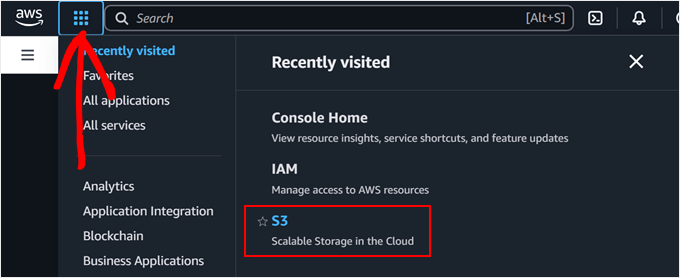
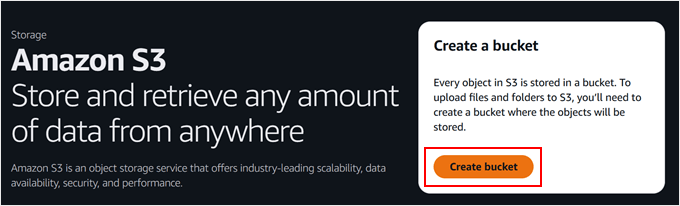
On the S3 dashboard, locate and click the 'Create bucket' button.
An Amazon S3 bucket functions as a container for your files. Consider it a specialized folder that will store all your WordPress backup archives.
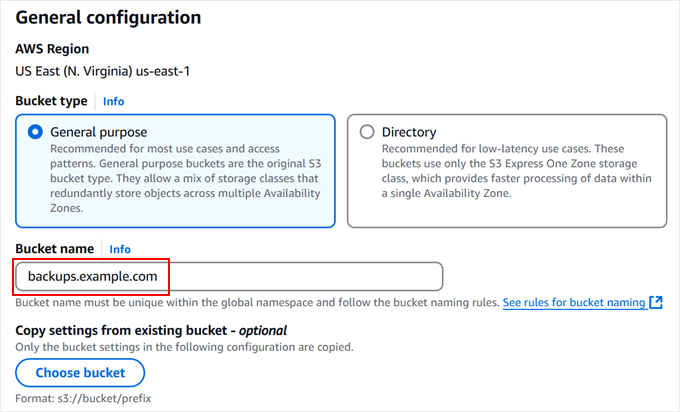
Select 'General purpose' for the 'Bucket type.' Then assign a unique name to your bucket.
Using your domain name is recommended for uniqueness, such as backups.yourdomain.com.
Note the selected 'AWS Region' (for example, 'US East N. Virginia'), as you may need to specify this same region in your WordPress plugin configuration later.
You can maintain default values for the remaining settings.
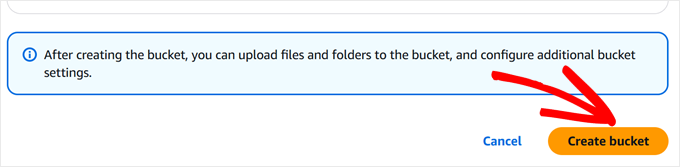
Scroll to the bottom of the page and click 'Create bucket.' Your new storage container will be ready within moments.
Step 2: Establish a Security Policy
Next, configure a security policy for your backups. This policy defines rules governing what actions can be performed on your backup files.
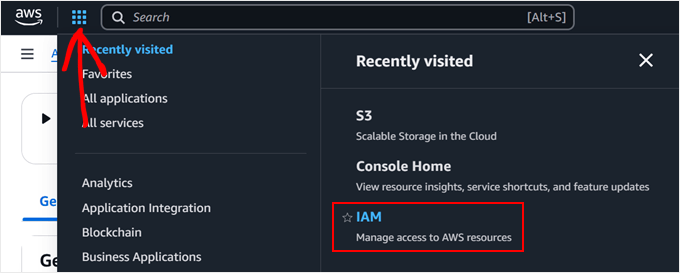
Return to the menu and select 'IAM' to access AWS's security management interface.
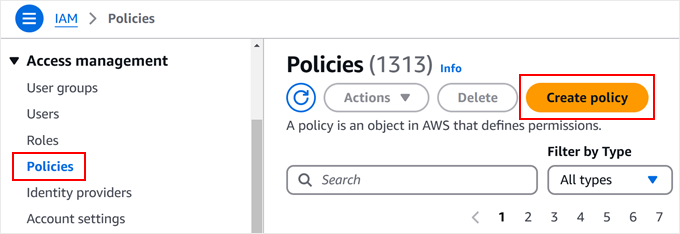
Navigate to the 'Policies' page and click 'Create policy' to define your backup permissions.
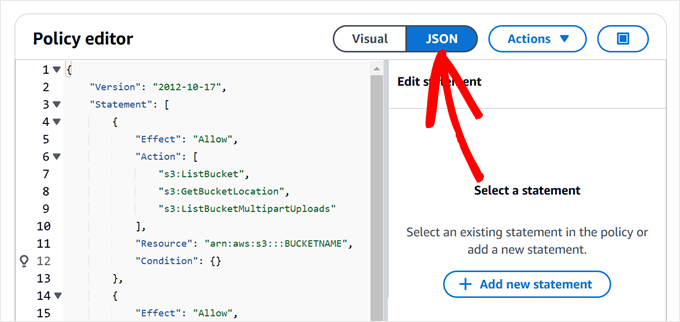
In the policy editor, select the 'JSON' tab to input security rules.
Copy and paste the following policy code into the editor. This JSON configuration specifies exactly what permissions your backup plugin will have:
{ "Version": "2012-10-17", "Statement": [ { "Effect": "Allow", "Action": [ "s3:ListBucket", "s3:GetBucketLocation", "s3:ListBucketMultipartUploads" ], "Resource": "arn:aws:s3:::BUCKETNAME", "Condition": {} }, { "Effect": "Allow", "Action": [ "s3:AbortMultipartUpload", "s3:DeleteObject", "s3:DeleteObjectVersion", "s3:GetObject", "s3:GetObjectAcl", "s3:GetObjectVersion", "s3:GetObjectVersionAcl", "s3:PutObject", "s3:PutObjectAcl" ], "Resource": "arn:aws:s3:::BUCKETNAME/*", "Condition": {} }, { "Effect": "Allow", "Action": "s3:ListAllMyBuckets", "Resource": "*", "Condition": {} } ] }This configuration enables your backup plugin to list files in your backup bucket and perform operations like adding, retrieving, and deleting backup files within it. The policy restricts the plugin from performing other actions, maintaining account security.
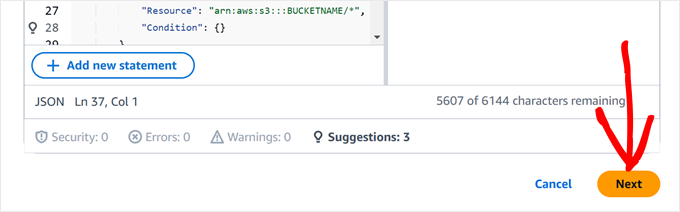
Scroll down the page and click 'Next.'
Assign a descriptive name to your policy, such as WordPress-Backup-Policy,Duplicator-Backup-Policy, or UpdraftPlus-Backup-Policy. Choose a name that clearly indicates the policy's purpose. This policy will function effectively with either WordPress backup plugin discussed in subsequent sections.