Two Effective Methods for Redirecting Pages and URLs in WordPress
Few things are more frustrating for website visitors than encountering broken links that lead to error pages. These seemingly minor issues can create significant problems, from confusing users to negatively impacting search engine rankings.
Many WordPress experts have managed numerous website migrations and content updates over the years. While setting up redirects might appear technical and intimidating initially, the process can be straightforward with the right approach.
This guide will demonstrate two practical methods for handling redirects in WordPress. These are simplified techniques that experienced developers use to maintain smooth website operations and positive user experiences.
Understanding the Importance of URL Redirects in WordPress
Numerous websites experience traffic loss and ranking declines due to broken links and missing pages. This makes proper URL redirects essential for any WordPress site.
Redirects become necessary in several common scenarios: moving to a new domain, changing URL structures, merging multiple posts or pages, removing outdated content that still receives traffic, restructuring website navigation, or creating temporary promotional landing pages.
These situations occur more frequently than many site owners anticipate, and having a solid redirect strategy can prevent significant problems in the future.
Broken links can substantially harm website performance. Beyond damaging search engine rankings, they erode user trust, reduce conversion rates, waste advertising budgets, and increase bounce rates.
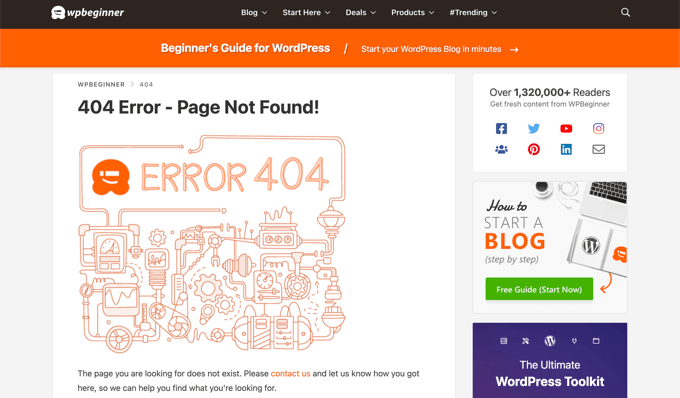
This creates a poor user experience and may negatively affect SEO performance.
Fortunately, tracking 404 errors and redirecting URLs to existing pages is relatively straightforward.
Let's explore how to redirect pages and URLs in WordPress using two distinct approaches:
- Creating Redirects Using SEO Plugins
- Creating Redirects Manually by Editing .htaccess (Advanced)
- Frequently Asked Questions About WordPress Redirects
Method 1: Creating Redirects Using SEO Plugins
The simplest approach to redirecting pages and URLs in WordPress involves using SEO plugins with redirection management features. Many comprehensive SEO plugins offer powerful redirection managers that simplify the setup process.
The initial step requires installing and configuring a suitable SEO plugin on your website. After installation, you'll need to activate the redirection manager component. Typically, this involves navigating to the plugin's settings and locating the redirects section, then clicking the activation button.
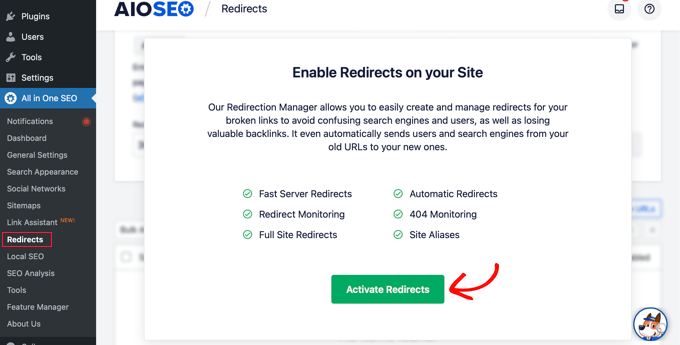
Next, access the settings tab to select a redirect method. The PHP option is often recommended because it's straightforward and doesn't require technical server configuration.
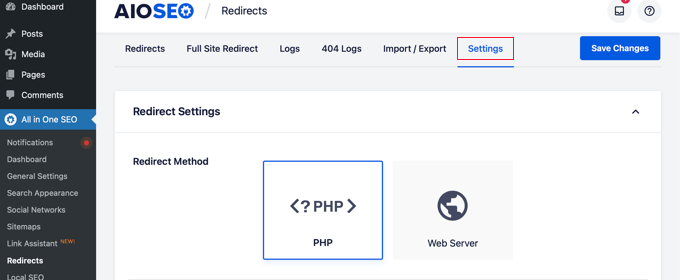
Once configured, you can redirect WordPress pages using either the plugin's redirection manager or the WordPress content editor.
Creating Redirects Through the Plugin Interface
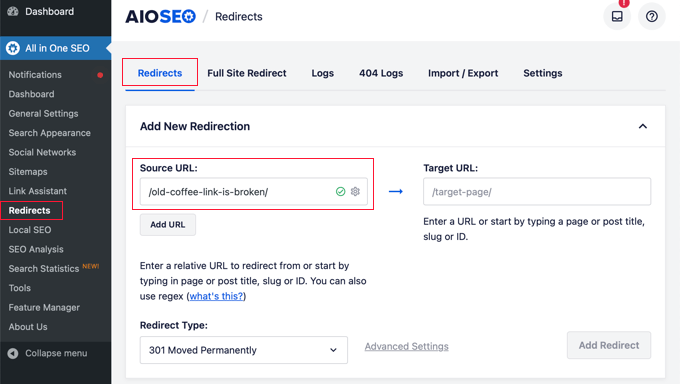
Navigate to the plugin's redirects section, which allows you to manage existing redirects and add new ones. To create a new redirect, enter the post slug of the non-working URL in the source field. The slug represents the portion of the URL following your domain name.
Consider this example URL:
https://example.com/old-coffee-link-is-broken/
In this case, the post slug is:
/old-coffee-link-is-broken/
Enter or paste this post slug into the source URL field as shown:
Next, input the post slug of the destination page in the target URL field.
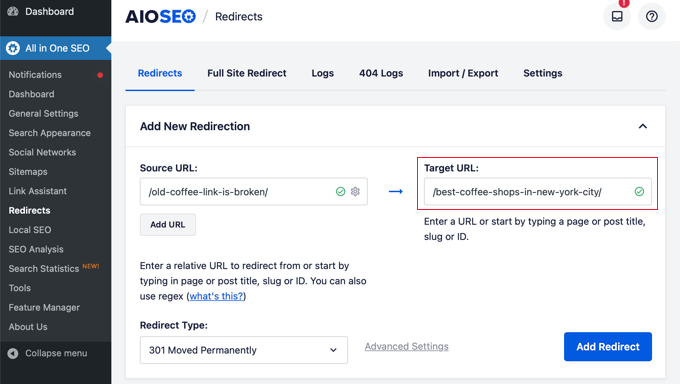
Alternatively, you can type part of the destination page's title, and the plugin will display matching posts and pages for selection.

The final step involves selecting a redirect type. Ensure the '301 Moved Permanently' option is chosen, then click the add redirect button.

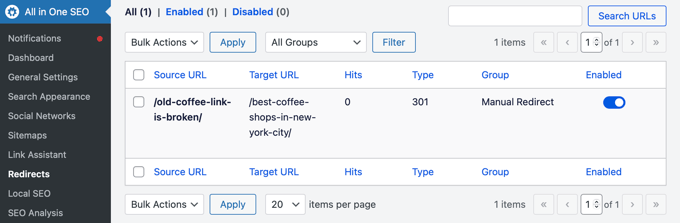
You can then review a log of created redirects. The hits column displays visitor counts for redirected links, and toggle options allow enabling or disabling individual 301 redirects.
Creating Redirects from the WordPress Content Editor
Many SEO plugins also allow redirecting published posts or pages directly from the content editor. When scrolling to the bottom of the WordPress editor, you'll typically find a plugin settings section with a redirects tab.
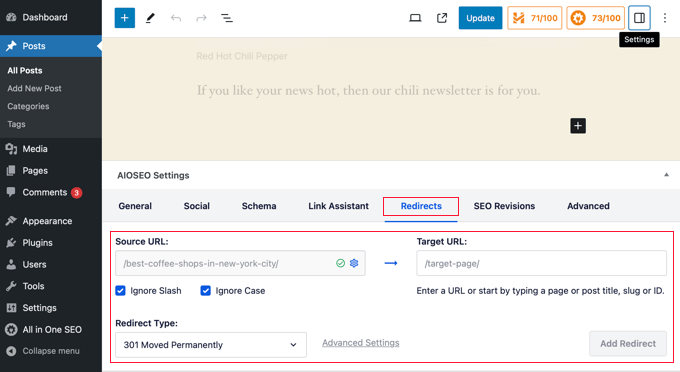
This section contains the same redirection options discussed earlier. The source URL is typically pre-filled, requiring only the target URL input. After ensuring the '301 Moved Permanently' redirect type is selected, click the add redirect button.
Method 2: Creating Redirects Manually by Editing .htaccess
An alternative approach involves redirecting pages or URLs without plugins by manually adding code to your website's .htaccess file. This method isn't recommended for beginners, as minor errors can potentially disrupt website functionality.
Before attempting this method, creating a backup of your .htaccess file is strongly advised. Changes can be made using file editor tools within some SEO plugins or by editing directly via FTP or your hosting provider's file manager.