8 Practical Strategies to Minimize Network Payloads in WordPress
By Editorial Team |
Does your WordPress website seem to load at a frustratingly slow pace, despite your optimization efforts?
When you conduct a speed analysis, you might encounter the 'Avoid enormous network payloads' alert.
While this terminology may appear technical, the concept is straightforward: your webpage is simply carrying excessive data.
Many WordPress experts dedicate significant effort to enhancing page loading speeds, ensuring their content appears instantly for visitors. They have encountered this specific warning and developed effective solutions.
This guide will demonstrate practical methods to decrease file sizes and prevent substantial network payloads within WordPress.
Understanding the Impact of Large Network Payloads in WordPress
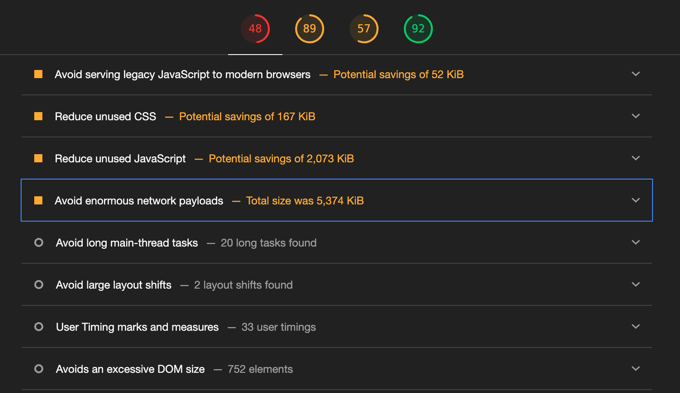
Have you utilized tools such as Google Lighthouse or PageSpeed Insights to evaluate your site's performance?
Occasionally, these tools may display the message, 'Avoid enormous network payloads.'
In essence, this indicates your webpage is excessively large, similar to an overloaded suitcase. A substantial webpage requires more time to load, potentially irritating your site's visitors.
A webpage's network payload represents the combined size of all components that constitute that page. This encompasses:
- Text Content: The written material displayed on the page
- Visual Media: Photographs and video content
- Programming Code: CSS and JavaScript files that control appearance and functionality
- Typefaces: Custom font styles for your text
- Additional custom elements
Consequently, the greater the combined size of these elements, the longer the delay before your webpage becomes visible.
What constitutes an excessive size? Consider these general guidelines:
- Optimal: When total page components remain below 1.6 MB, your site is well-optimized and loads rapidly. This represents an efficiently managed payload.
- Requires Attention: Pages between 2 MB and 4 MB indicate room for improvement. Performance tools will typically provide specific recommendations for enhancement.
- Excessive: Pages exceeding 4-5 MB create significant loading delays for visitors. Optimization should become an immediate priority in these cases.
When you encounter the 'Avoid enormous network payloads' notification, you can expand it to view a detailed list of all resources contributing to your webpage's size.
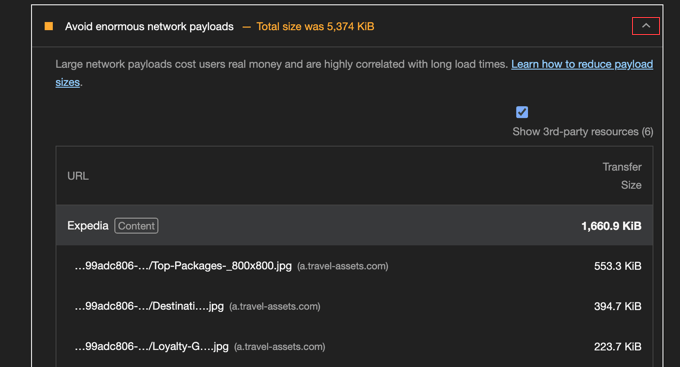
Notice that the largest files appear at the list's beginning. Concentrating optimization efforts on these substantial files or eliminating unnecessary resources will yield the most significant performance improvements.
By reducing these file sizes, you decrease the data required to display the webpage, resulting in faster loading times.
Now that you comprehend why large webpages present problems, let's examine practical methods to prevent them in WordPress. This article covers eight essential strategies:
- Optimize Image File Sizes
- Implement Proper Video Embedding Techniques
- Apply Lazy Loading to Images and Videos
- Minimize JavaScript and CSS File Sizes and Quantities
- Compress Files Using Gzip
- Leverage Browser Caching to Avoid Redundant Downloads
- Limit Font Usage or Employ System Fonts
- Identify and Replace Performance-Intensive Plugins
Let's begin exploring these optimization techniques.
1. Optimize Image File Sizes
Oversized images frequently contribute substantially to large network payloads.
Contemporary smartphones and digital cameras produce high-resolution images with considerable file sizes. However, maintaining these large dimensions is unnecessary for website display purposes.
Fortunately, you can optimize images to reduce their size by up to 80% without compromising visual quality. This adjustment typically produces more significant impact on your website's network payload than nearly any other modification.
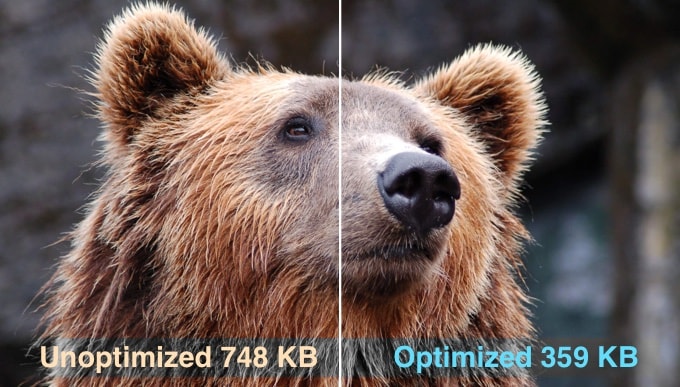
Many experienced developers optimize all images before uploading them to their websites. They resize images to appropriate dimensions and subsequently reduce file sizes using various optimization tools.
Numerous comprehensive guides exist that detail effective methods for optimizing images to enhance web performance while preserving quality.
2. Implement Proper Video Embedding Techniques
If your website includes video content, careful consideration of display methods is essential.
Directly uploading videos to your website can generate substantial network payloads and noticeably slow your site's performance, particularly if videos are configured to play automatically.
The most efficient approach involves embedding videos from established platforms such as YouTube or Vimeo.
This method allows videos to play on your website while being hosted on external servers, thereby excluding them from your network payload calculations.
This strategy provides significant benefits because your server avoids handling substantial data transfers. Additionally, these platforms specialize in efficient video delivery, featuring optimized streaming that adjusts to visitors' internet connection speeds.
Furthermore, many embedded video players only initiate loading when users activate playback, reducing initial data transfer requirements.
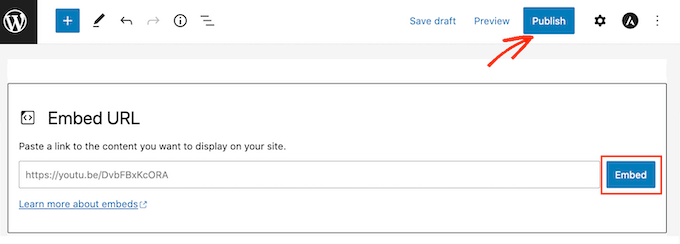
You can conveniently add videos to your website using standard embed codes provided by these platforms.
3. Apply Lazy Loading to Images and Videos
Lazy loading represents another effective technique for managing large network payloads, especially on media-rich websites.
Typically, when a webpage loads, browsers attempt to download all images and videos immediately, regardless of whether they will be immediately visible to users.
Consider a restaurant serving all courses simultaneously rather than sequentially. This overwhelming approach parallels what occurs on webpages without lazy loading implementation.
This creates substantial initial network payloads because browsers download data for entire pages immediately, even if users never scroll to view lower content.
The solution to this challenge is lazy loading.
Lazy loading functions similarly to a restaurant serving each course as you're prepared to enjoy it.
With lazy loading enabled, images and videos load only when they approach the user's visible screen area. This approach ensures browsers load content precisely when needed.
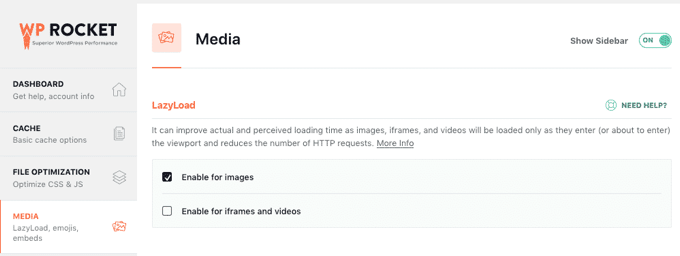
This technique reduces initial network payloads and decreases overall data download requirements.
Various instructional resources are available that demonstrate how to configure lazy loading within WordPress environments.
4. Minimize JavaScript and CSS File Sizes and Quantities
One of the most effective approaches to preventing substantial network payloads involves reducing the size of your CSS and JavaScript files.