A Comprehensive Guide to Implementing Hero Images in WordPress for Any Theme
By Editorial Team |
Looking to elevate the visual appeal of your WordPress website? Incorporating a hero image is an effective strategy.
A hero image serves as the initial visual element visitors encounter upon landing on your site. With approximately three seconds to capture their attention, optimizing this component is crucial.
Many experienced developers recall when hero images gained prominence in web design. Initially, implementation challenges were common, with issues like improper scaling across devices and display inconsistencies. Today, established methodologies exist to streamline this process.
This guide demonstrates straightforward approaches to integrate hero images into your WordPress site. Whether you utilize page builders or prefer the block editor, multiple solutions are available.
Initial Preparation: Creating Your WordPress Hero Image
Before implementing a hero image on your WordPress site, develop a compelling visual that will immediately engage visitors. An impactful hero section begins with a striking image that communicates your website's purpose.
Various graphic design tools are available for creating website visuals. These platforms typically offer user-friendly interfaces with numerous templates suitable for hero image creation. If one tool doesn't meet your needs, alternative options exist with comparable functionality.
Several considerations are important when designing your hero image.
First, consider dimensions. Hero images generally maintain moderate height while spanning the full width of your homepage.
A standard WordPress hero image measures approximately 1920 pixels in width by 400-600 pixels in height, though dimensions may vary based on your specific theme requirements.
Next, determine the message you wish to convey. Your hero image should quickly communicate your website's focus. This could feature product imagery, brand-representative photography, or even full-screen video backgrounds.
For instance, some websites feature their founders in homepage hero images to establish personal connection and brand authenticity.

Additionally, allocate space for textual elements. Many hero sections incorporate headlines or call-to-action buttons. Ensure sufficient area exists for these components while maintaining readability.
Examining websites within your industry can provide valuable inspiration for hero section design. Numerous WordPress website examples demonstrate effective implementation strategies.

With these preparations complete, let's examine practical implementation methods.
Implementing WordPress Hero Images
Research indicates that adding hero images to traditional WordPress themes can present challenges. The process varies significantly depending on your theme, as some include built-in hero sections while others require additional configuration.
Certain themes, for example, come with pre-configured hero sections that simplify implementation.

If your current theme lacks built-in hero functionality, implementation can become complex.
For new website projects without theme constraints, selecting a theme with integrated hero sections can save considerable development time.
Numerous WordPress themes available on the market include hero section capabilities. Alternatively, page builders combined with compatible themes offer another implementation approach.
Before making significant theme changes, testing modifications on a staging environment is recommended. This allows thorough evaluation before implementing changes on your live site.
If you're unfamiliar with this process, resources exist detailing proper WordPress theme modification procedures.
Prefer to maintain your current traditional theme? Proceed to the plugin-based method, which demonstrates how to add hero sections using specialized plugins. This approach functions with virtually any theme, enabling impressive hero image creation without comprehensive site redesign.
Use the following navigation to access your preferred implementation method:
- Method 1: Theme Customizer Implementation (Traditional Themes)
- Method 2: Full Site Editor Implementation (Block Themes)
- Method 3: Page Builder Implementation (Custom Landing Pages/Themes)
- Method 4: Plugin and Shortcode Implementation (Universal Theme Compatibility)
- Common Questions Regarding Hero Images
Method 1: Theme Customizer Implementation (Traditional Themes)
If utilizing a traditional theme with integrated hero section functionality, customization occurs through the Theme Customizer. Navigate to Appearance » Customize within your WordPress administration panel to begin.
Note: If the Theme Customizer option is unavailable in your dashboard, you're likely using a block theme. In this case, proceed to the next implementation method.
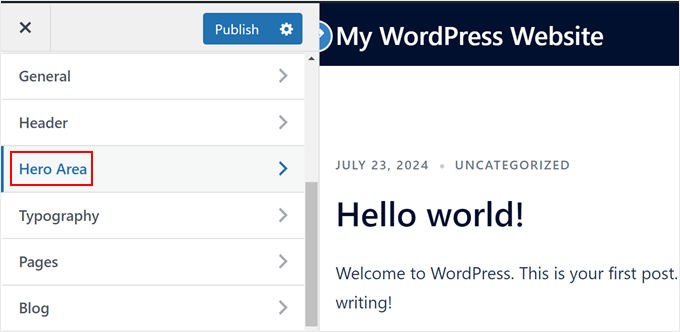
The sidebar presents multiple options for traditional theme customization.
In this example theme, hero section customization appears as 'Hero Area,' though terminology varies between themes. Select this option to proceed.
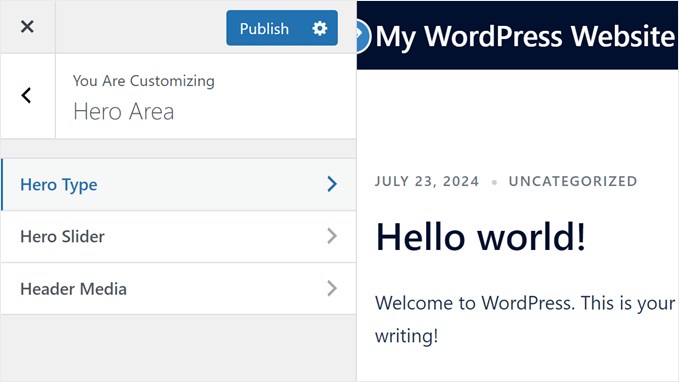
This particular theme provides three menus for hero section creation: Hero Type, Hero Slider, and Hero Media.
We'll utilize the first two menus, which sufficiently demonstrate hero section implementation.
First, choose 'Hero Type.'
Within Hero Type, select the media format for your hero section.
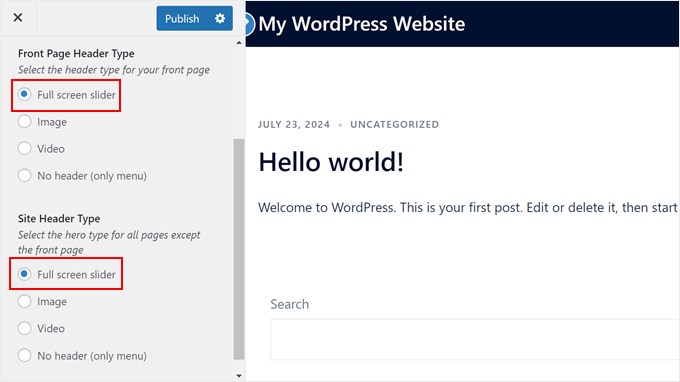
Options include full-screen slider, video, static image, or no header configuration.
We'll select full-screen slider for our homepage and site-wide hero section. This choice enables creation of multi-image sliders with overlaid text and button elements.
Return to the Hero Area menu and select 'Hero Slider.'
Open the 'First Slide' tab and