Complete Guide to Transferring Your Google Business Profile Website to WordPress
By Editorial Team |
Google's recent announcement about discontinuing Google Business Profile websites has prompted numerous business owners to seek guidance on transitioning their sites to WordPress before the service becomes permanently unavailable.
In March 2024, Google will deactivate over 21.7 million websites built through Google Business Profiles. This development represents another instance in Google's history of phasing out products and services.
If your business will be impacted by this change, now represents an ideal opportunity to relocate your website to a more stable platform.
This comprehensive guide will walk you through the complete process of migrating your Google Business Profile website to WordPress.
Below is an overview of the topics covered in this guide. You can navigate directly to specific sections using these links:
- Reasons for Migrating Your Google Business Profile Site to WordPress
- Advantages of Selecting WordPress for Your Website
- Step 1: Create a Backup of Your Google Business Profile Site
- Step 2: Selecting a Web Hosting Provider
- Step 3: Install and Configure WordPress
- Step 4: Transfer Content From Your Business Profile Site to WordPress
- Step 5: Optimize Your Business Site for Local SEO
- Step 6: Update Your Website URL in Google Business Profile
- Additional Recommendations: Install WordPress Plugins to Enhance Your Site
Reasons for Migrating Your Google Business Profile Site to WordPress
When establishing a Google Business Profile, you previously had the option to create a website. Google offered users without existing websites the ability to generate a complimentary single-page site instantly.
This feature enabled potential customers searching for your business locally to access comprehensive information including your business website, operating hours, physical locations, directions, contact numbers, and additional details.
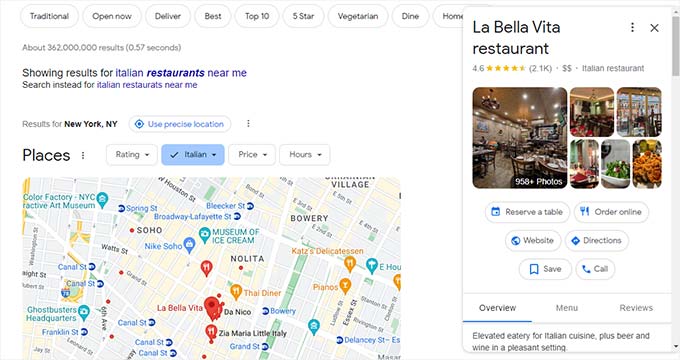
However, Google will terminate Business Profile websites in March 2024. Following the service closure, visitors will be automatically redirected to your Business Profile page.
Unfortunately, this redirection will only function until June 10, 2024. After this date, individuals attempting to access your site will encounter a 'page not found' error message.
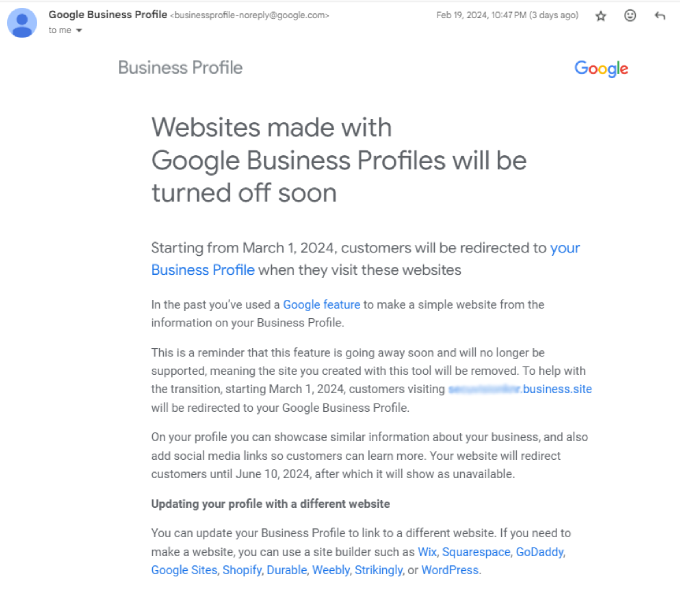
This situation could negatively impact your business by presenting a less professional appearance. Additionally, customers would lose access to detailed information about your company, products, and services.
Consequently, your conversion rates may decline, potentially resulting in lost customers to competitors.
For these reasons, migrating your Google Business Profile site to WordPress becomes essential.
Advantages of Selecting WordPress for Your Website
WordPress stands as the world's most popular website platform, powering over 43% of all websites on the internet.
One significant advantage is that WordPress is both free and open-source. By transitioning your Google Business Profile site to WordPress, you gain enhanced control and flexibility.
For example, you maintain complete ownership of your content without relying on third-party platforms. You only need web hosting services and a domain name to begin.
WordPress offers numerous themes, providing flexibility to create anything from a simple single-page website to a comprehensive online store. The platform also features thousands of plugins that extend functionality and add features.
Furthermore, WordPress is inherently SEO-friendly, allowing easy optimization for search engines like Google. This capability helps attract visitors to your website and improve conversion rates.
For these reasons and more, WordPress represents the optimal alternative to Google Business Profile websites.
Now let's examine the practical steps for migrating your Business Profile site to WordPress.
Step 1: Create a Backup of Your Google Business Profile Site
Before initiating the migration process to WordPress, your first step involves backing up data from your Google Business Profile site.
It's important to note that Google Business Profile doesn't provide an export feature, requiring manual downloading of all images, videos, and other media files.
To accomplish this, open your Google Business Profile website and right-click on any image you wish to preserve.
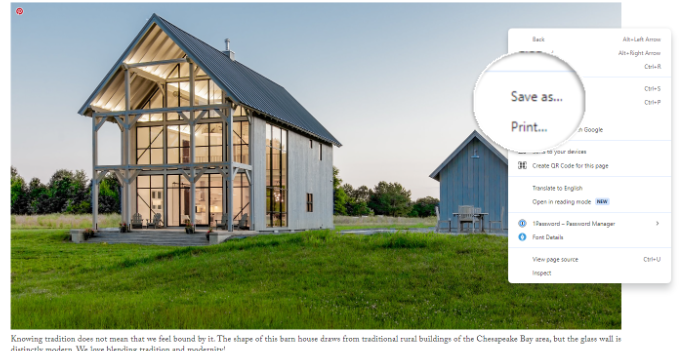
After right-clicking, select the 'Save as' option and store the image in a preferred location on your computer.
Similarly, you can copy text content from your website and paste it into a document.
Begin by highlighting the text on your website and right-clicking your mouse. From the context menu, choose the 'Copy' option.
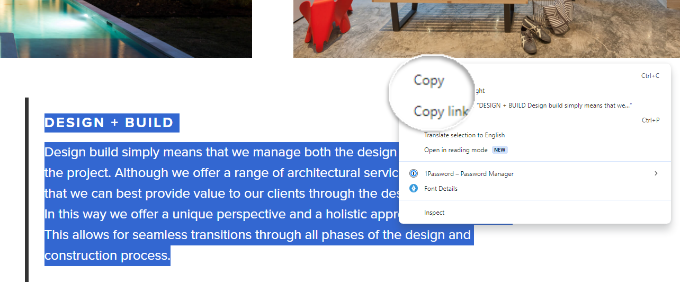
You may also utilize keyboard shortcuts for copying text. Press 'Ctrl + C' on Windows systems or 'Command + C' on Mac computers.
Next, open a text editor such as Notepad, Google Docs, or Microsoft Word and paste the copied content. If your text contains hyperlinks, Google Docs or Microsoft Word are preferable as they preserve these links during pasting.
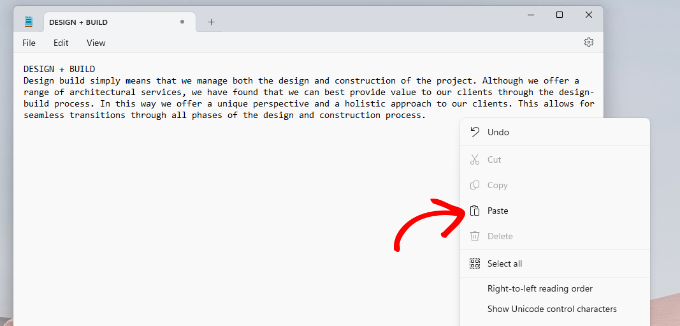
Right-click anywhere within the document and select 'Paste,' or use the 'Ctrl + V' keyboard shortcut on Windows and 'Command + V' on Mac to insert the text.
Since Business Profile sites typically consist of single pages with limited content, this backup process should proceed quickly.
Step 2: Selecting a Web Hosting Provider
Your next requirement involves securing web hosting services to operate a WordPress website. Web hosting serves as the storage location for all your website files, functioning as the digital residence where your site's content resides.
While WordPress software is freely available, you must subscribe to a hosting service to make your website accessible online.
Typically, web hosting services begin at approximately $7.99 monthly when paid annually, while domain names start around $16.99 per year depending on the domain extension. Building a WordPress site may involve additional costs for custom themes and enhanced features.
This represents a notable investment compared to the previously free Google Business Profile website creation.
Many hosting providers offer introductory discounts for new customers, often including complimentary domain registration and SSL certificates with hosting packages.
Numerous reputable hosting companies exist in the industry, with several officially recommended by WordPress developers.
Many providers offer simplified one-click WordPress installation processes. To begin, visit your chosen hosting provider's website and locate their signup or registration section.
Following this, you'll need to select an appropriate hosting plan.
Click the plan selection button to review available pricing options. For small business websites, entry-level or business-oriented plans typically provide sufficient resources.
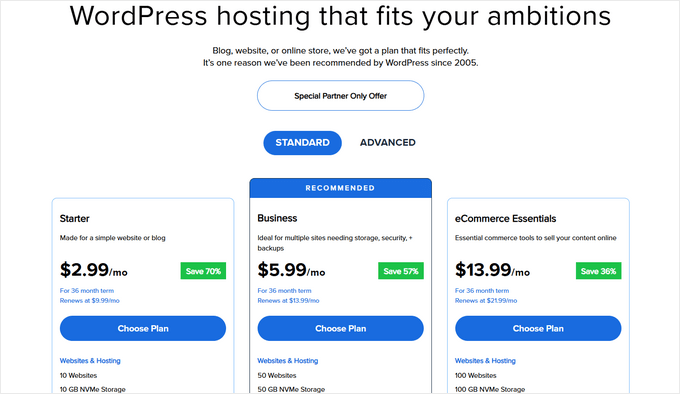
The subsequent screen will require you to choose