Resolving CSS Issues in the WordPress Admin Interface
By Editorial Team |
Few experiences are as disheartening as accessing your WordPress dashboard only to encounter a chaotic display of misaligned text and dysfunctional links. The familiar, organized interface vanishes, replaced by a seemingly unusable layout.
Before concern sets in, remember that this situation is typically more manageable than it appears. Many WordPress experts have encountered this exact scenario numerous times.
The problem usually stems from straightforward causes like plugin incompatibilities or caching irregularities. A systematic troubleshooting approach can help you identify the source efficiently and securely.
Addressing Admin CSS Problems Efficiently
CSS disruptions in the WordPress admin area commonly result from plugin conflicts, caching complications, or HTTPS/SSL configuration errors. The resolution involves systematic elimination: deactivate plugins, clear all cached data, and verify your site's URL configurations.
This guide will walk you through each diagnostic step to restore your admin interface to proper functionality, allowing you to resume your work promptly.
This article covers the following topics and diagnostic procedures:
- Common Causes of CSS Problems in the WordPress Admin Area
- Correcting CSS Issues in WordPress Admin Area
- Step 1: Identify Plugin Conflicts
- Step 2: Address Insecure File Loading on HTTPS
- Step 3: Examine Theme Interference
- Step 4: Resolve Caching Problems
- Step 5: Address CDN Complications
- Step 6: Adjust Incorrect File Permissions
- Step 7: Restore Corrupted Files
- Step 8: Investigate Browser Extensions
- Diagnostic Recommendations
- Common Questions (FAQ)
Common Causes of CSS Problems in the WordPress Admin Area
Based on extensive troubleshooting experience, CSS disruptions in the WordPress admin interface typically originate from several recurring issues. While frustrating, recognizing the underlying cause represents the initial step toward resolution.
| Frequent Cause | Impact on CSS |
|---|---|
| Plugin Incompatibilities | Suboptimally coded plugins may load custom stylesheets that conflict with or override default WordPress admin styling. |
| HTTP/HTTPS Configuration Errors | When your site employs HTTPS but certain files attempt to load via insecure HTTP, browsers will block them, resulting in styling failures. This constitutes a "mixed content" error. |
| Theme Interference | Some themes incorrectly load their CSS within the admin area. Custom admin themes can also generate styling conflicts. |
| Caching Difficulties | Your browser or caching plugins might serve outdated CSS file versions, leading to display abnormalities. |
| CDN Configuration Problems | A misconfigured Content Delivery Network (CDN) can similarly serve obsolete CSS files, causing missing or broken styles. |
| Inaccurate File Permissions | If CSS files possess incorrect permissions, your server may be unable to read them, preventing proper loading. |
| File Corruption | Core WordPress CSS files can occasionally become corrupted or disappear during updates or file transfers. |
| Browser Extension Interference | Ad blockers or security-focused browser extensions may sometimes disrupt CSS loading and rendering processes. |
Comprehending these causes assists in determining why your WordPress admin area experiences CSS disruptions, enabling effective correction.
Correcting CSS Issues in WordPress Admin Area
Follow these sequential instructions to diagnose and resolve CSS problems in your WordPress admin interface.
Step 1: Identify Plugin Conflicts
Poorly developed WordPress plugins frequently contribute to CSS breakdowns in the admin area. However, even well-constructed plugins might encounter issues with specific WordPress installations or server configurations.
Here is how to detect and address plugin conflicts.
Deactivate All Plugins
First, access your WordPress admin dashboard and proceed to the Plugins » Installed Plugins section.
Select all plugins, choose 'Deactivate' from the 'Bulk actions' dropdown menu, then click 'Apply.'
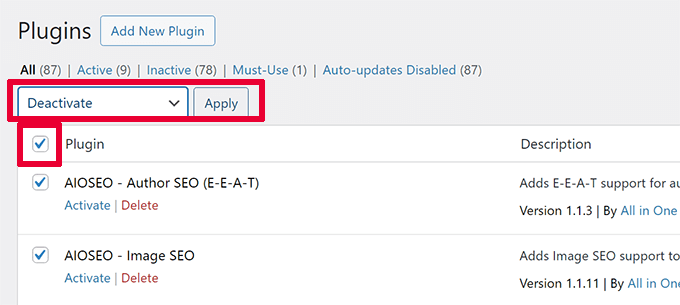
Subsequently, refresh your admin area or reload the page to verify whether the CSS problem resolves. If CSS functionality returns, the issue originates with one of the plugins.
Reactivate Plugins Individually
To pinpoint the problematic plugin, reactivate each one separately. Accomplish this by clicking the 'Activate' link beneath each plugin.
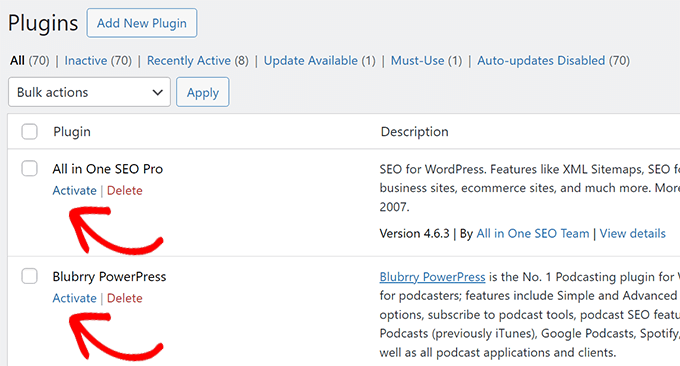
After activating each plugin, refresh the admin area to check for recurring CSS disruptions.
This process helps identify the specific plugin causing the complication.
Locate an Alternative or Update the Plugin
Once you identify the conflicting plugin, check whether updates are available. If updating doesn't resolve the issue, consider finding an alternative plugin or contacting the plugin developer for assistance.
Step 2: Address Insecure File Loading on HTTPS
Another frequent cause of CSS problems involves improperly configured secure URLs, resulting in mixed content issues.
This occurs when your website utilizes the HTTPS secure protocol, but CSS loads via HTTP or insecure protocols.
When this happens, modern browsers like Google Chrome automatically block insecure resources, causing CSS failures in your WordPress admin interface.
Confirm this issue using your browser's Inspect tool. Switch to the Console tab to view Mixed Content errors.
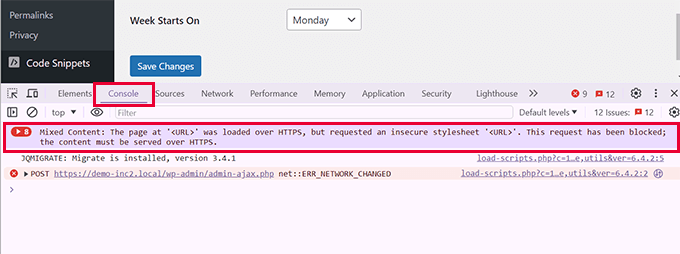
To resolve this, first ensure your WordPress settings contain correct URLs.
Navigate to Settings » General and verify that both WordPress Address and Site Address include HTTPS in their URLs.
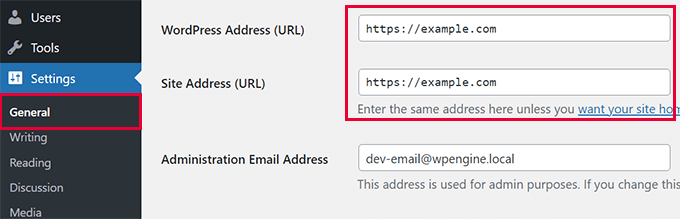
If both URLs already contain HTTPS, you can manually enforce WordPress to use the HTTPS protocol.
Edit your wp-config.php file and add the following code. This snippet instructs WordPress to consistently use secure connections for the admin area and assists servers in correctly identifying that secure connection, often resolving the issue.
define('FORCE_SSL_ADMIN', true); if (strpos($_SERVER['HTTP_X_FORWARDED_PROTO'], 'https') !== false) { $_SERVER['HTTPS'] = 'on'; }Alternatively, employ plugins designed to enforce HTTPS for all URLs.
Step 3: Examine Theme Interference
Unnecessary theme interference represents another common source of CSS problems in the WordPress admin area.
Here is how to identify and address theme-related issues.
Switch to a Default Theme
To determine whether your WordPress theme causes CSS disruptions, first switch to a default WordPress theme.
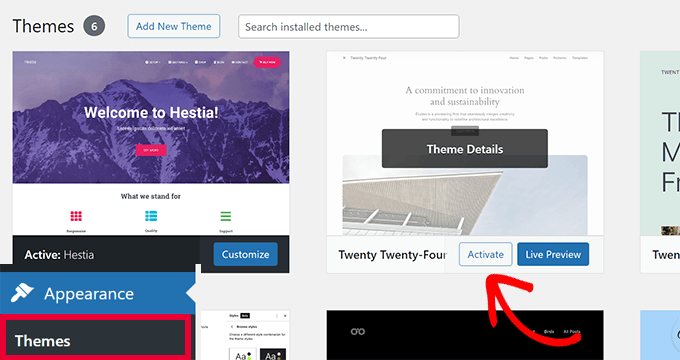
Access your WordPress dashboard and navigate to the Appearance » Themes section.
Here, activate a default WordPress theme, such as Twenty Twenty-Four.