Resolving CSS Display Issues in the WordPress Admin Interface
By Editorial Team |
Few experiences are more disheartening than accessing your WordPress control panel only to encounter a chaotic arrangement of misaligned text and dysfunctional navigation. The orderly, intuitive interface you rely on can suddenly appear distorted and nearly impossible to use.
Before concern sets in, remember that this is a frequent challenge with straightforward solutions. Many WordPress experts have addressed this precise scenario numerous times, and resolution is typically more accessible than initial appearances suggest.
The root cause is often an uncomplicated conflict between extensions or a temporary caching anomaly. A systematic diagnostic approach can help you pinpoint the source efficiently and restore normal functionality.
Essential Steps for Admin CSS Restoration
Display problems within the WordPress administrative interface commonly stem from extension incompatibilities, caching irregularities, or incorrect secure protocol configurations. Effective troubleshooting involves methodical elimination: deactivate extensions, purge cached data, and confirm your website's address settings.
This guide will walk you through each diagnostic phase to rehabilitate your administrative panel, allowing you to resume your workflow promptly.
Below is a summary of the topics and corrective procedures covered in this article:
- Common Origins of CSS Problems in the WordPress Admin Area
- Correcting CSS Issues in the WordPress Admin Area
- Phase 1: Investigate Extension Conflicts
- Phase 2: Address Insecure File Loading on HTTPS
- Phase 3: Examine Theme Interference
- Phase 4: Resolve Caching Problems
- Phase 5: Rectify CDN Configuration Issues
- Phase 6: Adjust Incorrect File Permissions
- Phase 7: Restore Corrupted Files
- Phase 8: Inspect Browser Add-ons
- Diagnostic Recommendations
- Commonly Asked Questions (FAQ)
Common Origins of CSS Problems in the WordPress Admin Area
Based on extensive troubleshooting experience, styling irregularities in the WordPress administrative panel usually originate from a handful of predictable sources. While frustrating, identifying the underlying factor is the initial move toward resolution.
| Frequent Cause | Impact on CSS |
|---|---|
| Extension Conflicts | Extensions with suboptimal code can introduce their own style rules that clash with or override the default WordPress administrative styling. |
| HTTP/HTTPS Discrepancy | When a site operates on HTTPS but certain resources attempt to load via insecure HTTP, browsers will restrict them, resulting in styling failures. This is known as a "mixed content" error. |
| Theme Interference | Certain themes may incorrectly apply their CSS within the admin interface. Custom administrative themes can also introduce styling conflicts. |
| Caching Irregularities | Your web browser or a caching extension might deliver an obsolete version of a CSS file, leading to presentation anomalies. |
| CDN Complications | A poorly configured Content Delivery Network (CDN) can serve outdated CSS files, causing styles to appear broken or absent. |
| Incorrect File Permissions | If CSS files possess improper access rights, your server may be unable to read them, preventing their loading. |
| Damaged Files | Core WordPress CSS files can occasionally become corrupted or disappear during an update or file transfer process. |
| Browser Add-ons | Advertisement blockers or other security-oriented browser extensions can sometimes disrupt how CSS is loaded and rendered. |
Comprehending these triggers will assist you in determining why your WordPress administrative panel is exhibiting CSS problems, enabling you to implement an effective solution.
Correcting CSS Issues in the WordPress Admin Area
Follow these sequential instructions to diagnose and resolve CSS display problems within the WordPress administrative interface.
Phase 1: Investigate Extension Conflicts
Frequently, extensions with coding deficiencies are responsible for CSS breakdowns in the admin area. However, even well-constructed extensions can encounter issues with particular WordPress installations or server environments.
Here is the process for detecting and remedying extension conflicts.
Deactivate All Extensions
Begin by accessing your WordPress administrative dashboard and proceeding to the Extensions » Installed Extensions section.
Select all extensions, choose 'Deactivate' from the 'Bulk actions' menu, and click 'Apply.'
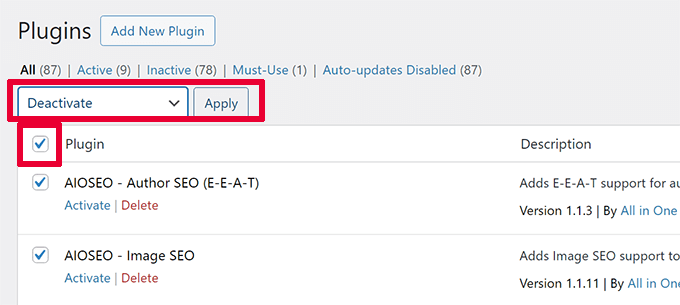
Afterward, refresh your administrative interface to check if the CSS problem is resolved. If the display corrects itself, the issue originates from one of the extensions.
Reactivate Extensions Individually
To identify the specific extension causing the disruption, reactivate each one separately. This can be done by clicking the 'Activate' link beneath each extension.
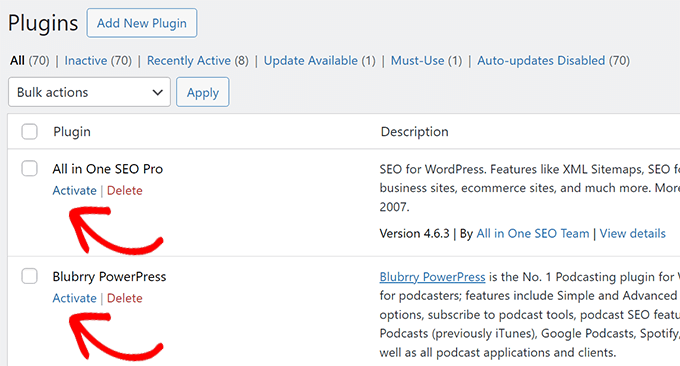
Following the activation of each extension, refresh the administrative area to see if the CSS problem reoccurs.
This procedure will help you isolate the problematic extension.
Seek an Alternative or Update the Extension
Once the conflicting extension is identified, check for available updates. If updating does not fix the issue, consider locating a substitute extension or reaching out to the extension developer for assistance.
Phase 2: Address Insecure File Loading on HTTPS
Another prevalent cause of CSS disruption involves incorrect secure URL configurations, leading to mixed content errors.
This occurs when your website is configured to use the HTTPS secure protocol, but CSS resources are served via HTTP, the insecure protocol.
When this happens, modern browsers like Google Chrome will automatically block these insecure resources, resulting in a broken CSS presentation within your WordPress admin area.
You can confirm this issue using your browser's Developer Tools. Navigate to the Console tab, where you will likely observe Mixed Content error messages.
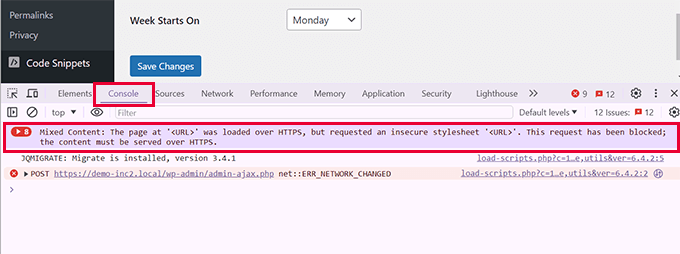
To rectify this, first verify that your WordPress configuration uses the correct addresses.
Visit the Settings » General page and ensure both the WordPress Address and Site Address fields contain HTTPS in their URLs.
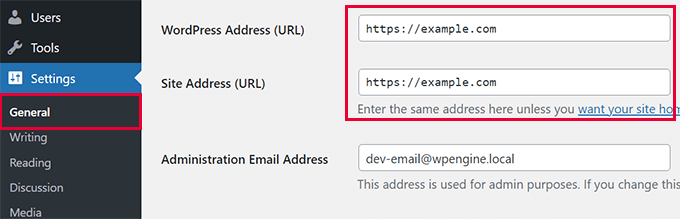
If HTTPS is already present in both addresses, you can manually instruct WordPress to enforce the HTTPS protocol.
Edit your wp-config.php file and insert the following code snippet. This directive commands WordPress to consistently use a secure connection for the administrative area and assists servers in correctly recognizing that secure connection, which often resolves the problem.
define('FORCE_SSL_ADMIN', true); if (strpos($_SERVER['HTTP_X_FORWARDED_PROTO'], 'https') !== false) { $_SERVER['HTTPS'] = 'on'; }Alternatively, you can employ extensions designed to enforce HTTPS across all URLs.
Phase 3: Examine Theme Interference
Unnecessary theme involvement is another frequent contributor to CSS problems within the WordPress administrative interface.
Here is how you can detect and address theme-related issues.
Switch to a Default Theme
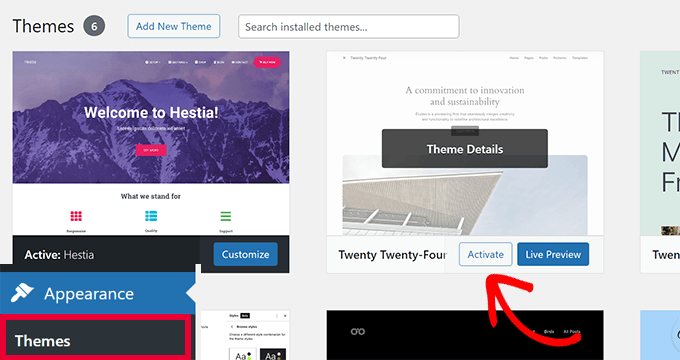
To determine if your WordPress theme is responsible for the CSS disruption, first switch to a default WordPress theme.
Access your WordPress dashboard and go to the Appearance » Themes page. Here, activate a default WordPress theme, such as Twenty Twenty-Four.