Step-by-Step Guide to Launching a Professional Nutrition Business Website
Many nutrition professionals with excellent credentials and knowledge find it challenging to establish their online presence and convert interest into paying clients. The issue often lies not in their expertise but in effectively reaching and engaging potential customers through digital channels.
Numerous health and wellness entrepreneurs report feeling stagnant despite active social media participation. They regularly share meal suggestions, success stories, and educational content, yet struggle to maintain consistent client acquisition.
Relying exclusively on social platforms is comparable to building your enterprise on borrowed property. The most significant transformation occurs when you establish your own professional website, which provides complete control and immediately enhances credibility with prospective clients.
The encouraging aspect is that developing a polished nutrition website is more straightforward than many anticipate. WordPress simplifies the process, making it accessible even for those without prior website development experience.
This comprehensive guide will walk you through each phase of launching your nutrition business website, enabling you to begin attracting clients promptly.
Benefits of a Website for Nutrition Professionals
For dietitians and nutritionists, establishing a WordPress website represents a strategic decision with multiple advantages. It extends beyond mere online visibility to creating accessible pathways for potential clients to discover, trust, and contact you.
A professional website enables you to present your services, qualifications, and client achievements in an organized manner. You maintain complete authority over your brand representation and can emphasize your specialized knowledge. Without a dedicated website, you risk losing clients to competitors with stronger online discoverability.
Beyond enhancing credibility, a website facilitates connections beyond geographical limitations. You can engage broader audiences and potentially offer virtual coaching or nutritional plan sales. Additionally, you can regularly update content to keep clients informed with valuable insights and recommendations.
Launching Your Nutrition Business Website
Your initial decision involves selecting an appropriate website platform. Based on extensive experience, WordPress consistently proves optimal for this purpose.
WordPress serves as an ideal foundation for nutrition businesses, offering intuitive interfaces, extensive customization capabilities, and scalability as your enterprise expands. This makes it suitable even for beginners in website development.
Furthermore, WordPress supports specialized tools designed for nutrition websites. You can implement plugins for meal plan templates, online course platforms for nutrition programs, and client consultation forms.
Numerous recipe plugins are available if you intend to create content centered around healthy meals and their preparation methods.
Before proceeding, recognize that two WordPress variants exist, requiring careful selection for your business needs. WordPress.com functions as a hosted blogging platform, while WordPress.org represents self-hosted WordPress, providing complete control and serving as the appropriate choice for your nutrition website.
For detailed comparisons, consult comprehensive guides comparing these platforms.
While website construction represents a crucial phase, you may encounter challenges during the process. Rest assured, we will guide you through each sequential phase. The following sections will address these steps:
- Step 1. Strategic Planning for Your Nutrition Website
- Step 2. Establishing Hosting, Domain, and WordPress
- Step 3. Building Your Nutrition Business Website
- Step 4. Selecting and Implementing an Appropriate Nutrition Theme
- Step 5. Customizing the Homepage to Align with Your Brand
- Step 6. Creating Service Pages for Online Nutrition Consultations
- Step 7. Developing Subscriber-Exclusive Online Courses
- Step 8. Implementing a Nutrition Blog to Demonstrate Expertise
- Step 9. Establishing Credibility Through Testimonials and Qualifications
- Step 10. Integrating Client Contact Mechanisms
- Step 11. Configuring Navigation Menus
- Bonus Section: Growth Strategies for Your Nutrition Website
- Frequently Asked Questions About Nutrition Business Websites
Let's begin the implementation process.
Step 1. Strategic Planning for Your Nutrition Website
Before addressing technical aspects, dedicate time to strategic website planning. Generally, this involves analyzing three fundamental elements: target audience, website objectives, and user experience.
Identifying Your Target Audience
Consider your intended audience—whether individuals seeking meal plans, nutrition coaching, healthy recipes, or comprehensive services. Understanding your target demographic is essential as it influences all aspects from website design to content creation.
To facilitate this analytical process, consider these guiding questions:
- What are your users' primary objectives? Are they pursuing health guidance, managing medical conditions, or enhancing performance?
- Who comprises your target demographic? Are they busy professionals, parents, athletes, or individuals with specific dietary requirements?
- What challenges do they encounter? Are they seeking meal alternatives, weight management strategies, or performance nutrition?
- What communication style resonates best? Should your website adopt a friendly, approachable tone or maintain professional, expert-driven presentation?
Addressing these questions helps formulate clearer audience understanding—often termed 'customer persona.' This persona clarifies their needs, goals, and preferences, informing your website and content strategy.
Defining Your Nutrition Website's Primary Objectives
Next, establish your website's central purpose. Are you aiming to educate visitors about healthy lifestyles, operate nutrition-related e-commerce, provide consultations, or offer comprehensive services?
Your website should accurately reflect your offerings while addressing audience requirements. Consider these approaches based on your objectives:
- For consultation services, incorporate booking forms or calendar integrations for convenient client scheduling.
- For educational purposes, implement blog posts, guides, or online courses to share valuable information.
- For product sales, ensure clear, easily navigable shop sections where visitors can browse and purchase.
Clear purpose definition helps maintain website focus, facilitating audience service and business goal achievement.
Considering User Experience
When visitors arrive at your website, what will they require? How can you streamline their journey for simplicity and satisfaction? Consider these elements for optimal user experience:
- Organize content systematically. Implement categories like 'Meal Plans,' 'Consultations,' and 'Recipes' for easy information location.
- Utilize clear calls-to-action. Incorporate buttons or links with explicit instructions such as 'Schedule Consultation' or 'Explore Meal Plans' to guide visitor actions.
- Maintain simplified navigation. Ensure your menu remains intuitive and directs visitors precisely to needed information.
Dedicate sufficient time to planning these foundational components. This preparation establishes success parameters and ensures your website evolves into a valuable, engaging resource for your audience.
Once you've completed strategic planning, proceed to the subsequent phase.
Step 2. Establishing Hosting, Domain, and WordPress
Configuring a WordPress website for your nutrition business can be straightforward. Begin by securing a domain name and web hosting service.
A domain name functions as your digital address—what clients enter into browsers to locate you, such as nutritionexpert.com or healthguidehub.com.
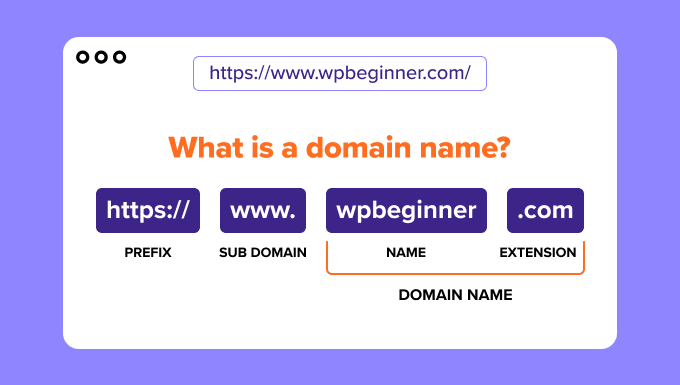
Web hosting represents where your website resides on the internet. Numerous WordPress hosting options exist to simplify this process for nutrition websites.
Although WordPress software is freely available, hosting and domain registration typically involve expenses. Generally, domains cost approximately $14.99 annually, while hosting begins around $7.99 monthly, representing ongoing business expenditures.
Many hosting providers offer bundled packages that include domain registration, hosting services, and SSL certificates—essential for secure client information handling online.
When selecting hosting plans, 'Starter' or 'Business' tiers typically cover fundamental requirements for nutrition websites. Some providers offer specialized e-commerce plans with integrated shopping cart functionality and additional online business features.
After choosing an appropriate plan, proceed with the registration process to establish your website foundation.