3 Effective Methods to Build Wholesale Order Forms in WordPress
Managing wholesale operations through WordPress can become remarkably efficient with the proper configuration. However, without dedicated tools, the process often becomes cumbersome for both business owners and their clients.
When bulk purchasers must navigate through numerous pages to locate items, it significantly slows down transactions. This experience resembles entering a disorganized warehouse—confusing and time-consuming.
While WooCommerce doesn't include native functionality for wholesale bulk ordering, you can easily implement this capability through specialized order forms.
This guide demonstrates how to establish a streamlined, intuitive wholesale order form within WordPress to accelerate B2B transactions.
Advantages of Implementing Wholesale Order Forms
Numerous B2B enterprises and dropshipping operations seek wholesale pricing arrangements to generate profit margins when reselling products.
If your online store can accommodate large-volume orders, establishing a bulk ordering system with wholesale pricing enables customers to purchase in quantity.
Wholesale order forms streamline the purchasing workflow for clients. They can efficiently select required products, specify quantities, and submit orders without complications.
WooCommerce, the widely adopted open-source eCommerce platform for WordPress, serves millions of businesses across various scales. It provides excellent functionality for creating attractive storefronts with product displays and order management.
For those seeking simplified solutions to support reseller networks, integrating a wholesale order form into your WordPress site represents an optimal approach.
With these considerations in mind, we'll explore three distinct methods for creating wholesale order forms. To navigate directly to any specific approach, use the quick links below:
- Method 1: Developing Wholesale Order Forms Using Wholesale Suite
- Method 2: Developing Wholesale Order Forms Using WPForms
- Method 3: Developing Wholesale Order Forms Using WP Simple Pay
- Selecting the Appropriate Wholesale Method
- Additional Insight: Implementing Wholesale Pricing in WooCommerce
- Common Questions Regarding Wholesale Order Form Creation
Let's begin the implementation process.
Method 1: Developing Wholesale Order Forms Using Wholesale Suite
The recommended approach for establishing online wholesale order forms involves Wholesale Suite. This collection of plugins delivers comprehensive wholesale functionality directly integrated with WooCommerce stores.
Since it maintains seamless compatibility with WooCommerce, this solution proves ideal for existing online merchants.
Components of Wholesale Suite
The suite comprises three primary plugins:
- Wholesale Order Form: This plugin enables creation of customizable wholesale order forms tailored to specific business requirements.
- Wholesale Prices Premium: Allows configuration of custom pricing for WooCommerce products, supporting multiple tiers of wholesale discounts.
- Wholesale Lead Capture: Facilitates construction of wholesale registration forms, login systems, and confirmation pages to enhance buyer experience.
Step 1: Installing the Wholesale Suite Plugin
Begin by downloading the Wholesale Order Form plugin. For installation assistance, consult standard WordPress plugin installation procedures.
Step 2: Creating the Wholesale Order Form
Navigate to Wholesale Order » Forms within your WordPress administration area. Select 'Add Form' to initiate a new form creation.
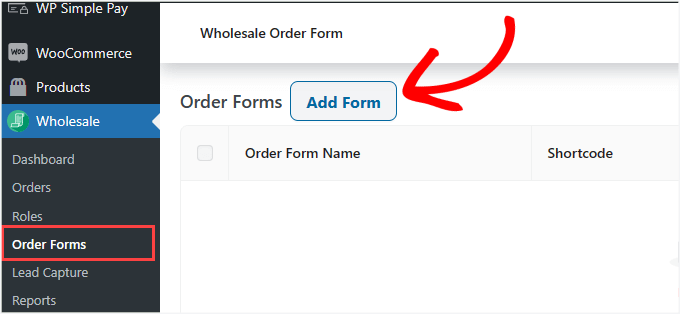
This action redirects to the Form Editor interface. Customize the 'Order Form Table' section to determine how products will display to customers on the front end.
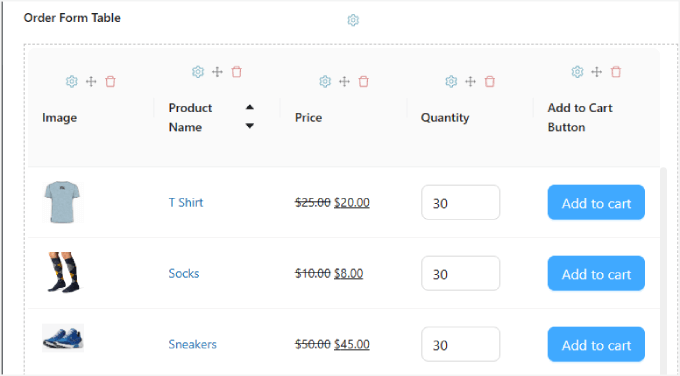
The system should automatically populate products within the 'Order Form Table' section.
If your WooCommerce store contains no products, you must first add inventory items. For comprehensive product setup guidance, reference standard WooCommerce documentation.
Once products are available, simply drag and drop modules from the table elements panel (located under the 'Edit Form' tab on the editor's right side) into the form structure.
Numerous elements are available for inclusion, beginning with 'Header/Footer Elements.' These encompass search functionality, category filtering, cart addition controls, subtotal displays, and additional features.
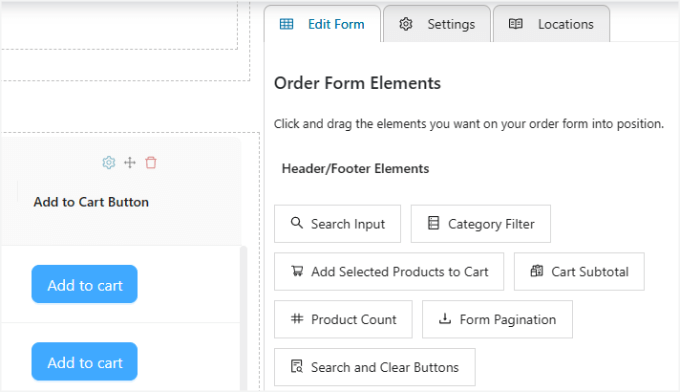
These elements prove particularly valuable for extensive product catalogs, assisting users in locating specific items and viewing total costs at the form's top or bottom sections.
Additionally, you can customize all table elements, including product images, names, pricing, inventory levels, and related details.
Remember to incorporate 'Add to Cart Button' elements for each product to enable customer purchasing actions.
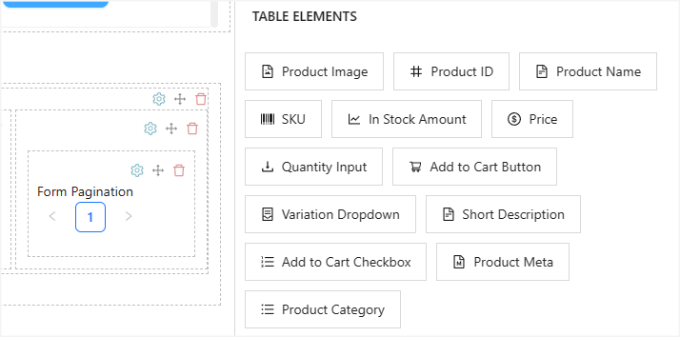
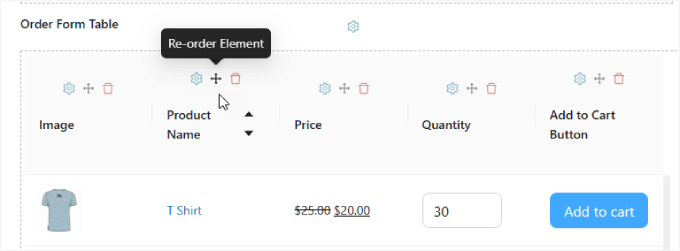
To rearrange form column positions, select the 'Re-order Element icon' positioned above each column. This enables dragging columns horizontally. The trash icon permits column deletion when necessary.
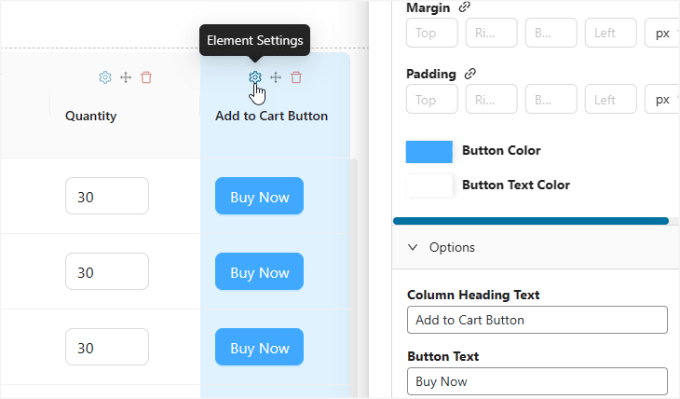
To modify text content or adjust styling for any input field, click the 'Element Settings' icon to reveal a configuration sidebar. For instance, you can alter button colors or change 'Button Text' to alternative labels like 'Purchase Now.'
Step 3: Configuration Adjustments
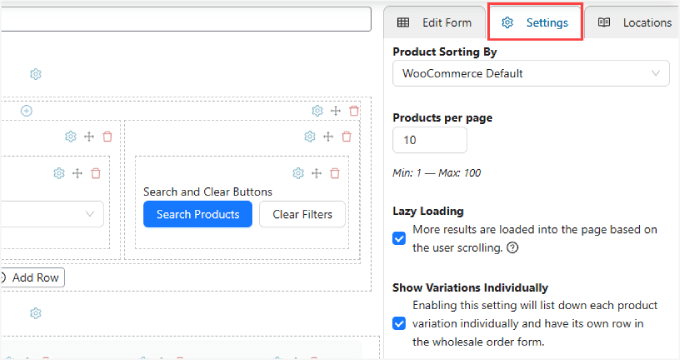
Within the 'Settings' tab on the right panel, customize product sorting methods, items displayed per page, and whether product variations appear individually.
The 'Lazy Loading' option enables progressive product loading during user scrolling, eliminating the need for pagination navigation.
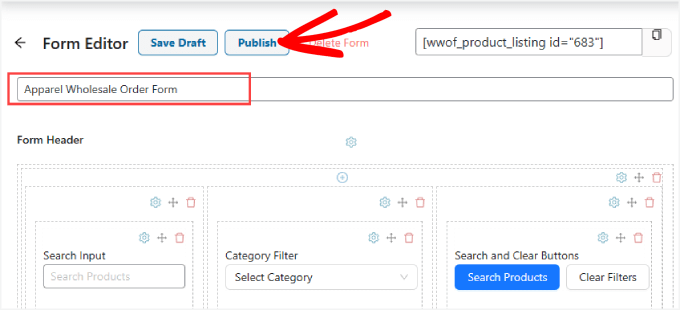
Step 4: Form Publication
After completing form customization, assign an appropriate name to your order form. Select the 'Publish' button when ready to activate the form publicly.