A Comprehensive Guide to Adding Forms to Your WordPress Website
Many WordPress users find that embedding forms on their sites presents unexpected challenges. Attempting to insert code from services like Microsoft Forms or Google Forms often results in broken layouts or non-functional forms.
This leads to a common question among site owners:What is the correct method for implementing forms in WordPress?
The encouraging reality is that with appropriate tools, this process becomes straightforward.
Whether you require a simple contact form, newsletter subscription, or more complex functionality, user-friendly solutions exist that work immediately.
This guide provides tested, step-by-step methods to help you implement functional WordPress forms efficiently.
Understanding WordPress Forms and Their Significance
A WordPress form serves as an interactive tool for gathering information from website visitors. It enables users to submit details such as names, email addresses, and feedback.
Forms support numerous applications.
You can implement contact forms for user communication, survey forms for opinion collection, or registration forms for events.
Additional uses include appointment scheduling, donation collection, and customer support management. Many organizations also utilize forms for lead generation and service requests.
Without forms, websites may miss valuable engagement opportunities. Implementing forms represents a strategic decision for effective website management.
Methods for Implementing Forms in WordPress
The following sections detail various approaches for adding forms to WordPress sites.
For specific form types, navigate directly to relevant sections:
- Implementing WPForms on Your WordPress Site
- Adding Donation Forms to WordPress
- Integrating HubSpot Forms with WordPress
- Embedding Google Forms in WordPress
- Implementing Zoho Forms on WordPress
- Adding Email Subscription Forms
- Integrating Payment Processing Forms
- Using Formidable Forms with WordPress
- Implementing Gravity Forms
- Adding Microsoft Forms to WordPress
- Embedding HTML Forms Directly
- Common Questions About WordPress Form Implementation
- Further Resources for WordPress Form Usage
Let's begin the implementation process.
1. Implementing WPForms on Your WordPress Site
WPForms represents a comprehensive form-building solution widely adopted by WordPress users. Many experienced developers recommend this tool for its versatility.
Numerous organizations utilize this plugin for contact forms, user surveys, and service requests. Its reliability has been demonstrated through extensive practical application.
This platform offers numerous pre-designed templates that can be customized for various purposes.
The integrated AI functionality can generate forms based on simple descriptions of your requirements.
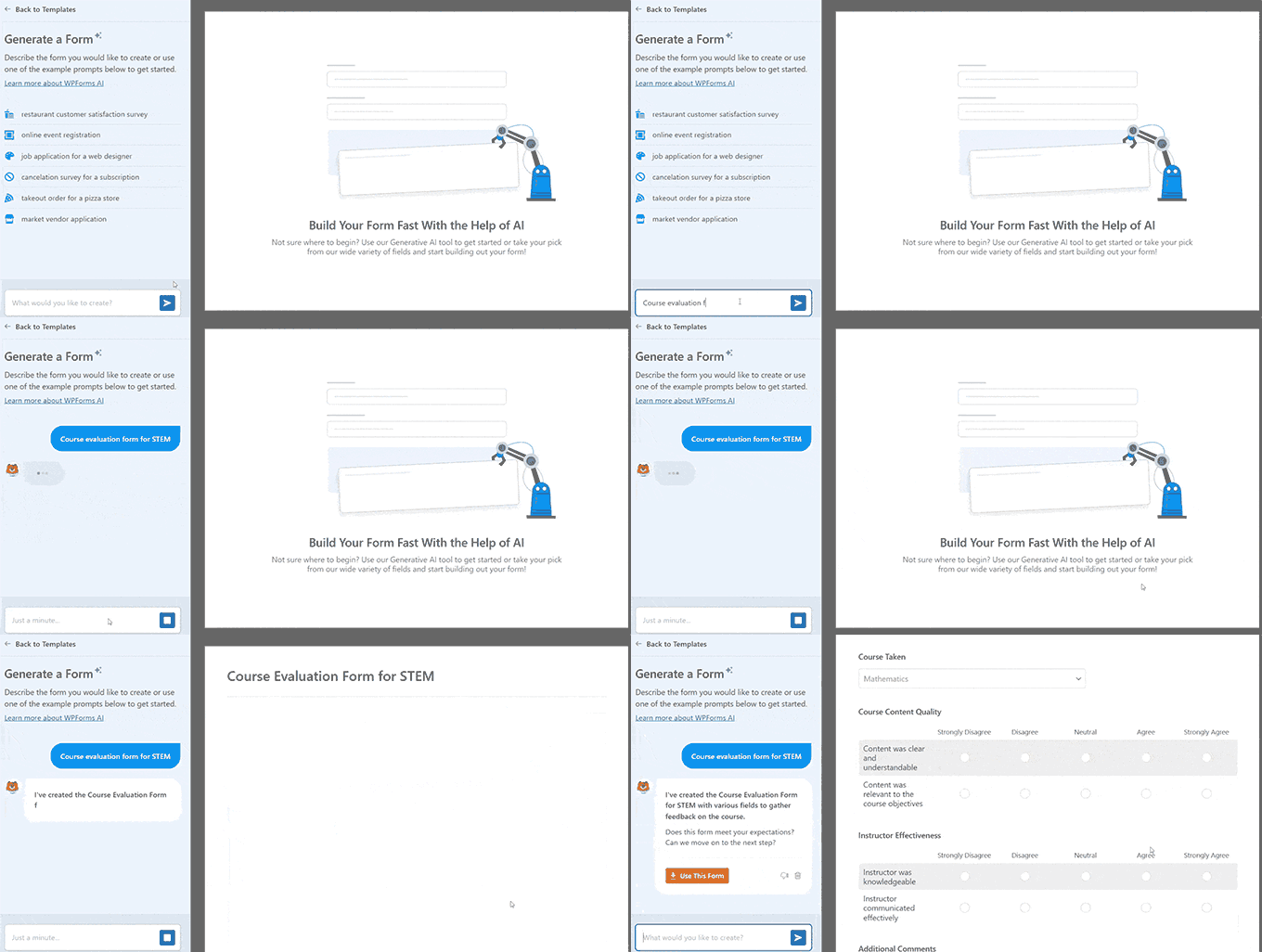
Beyond basic contact forms, WPForms supports creation of various form types including:
- Survey and feedback forms
- Online ordering systems
- Payment collection forms
- File submission forms
- Interactive conversational forms
- Multi-page form sequences
For implementation, you can utilize either the WPForms block or shortcode functionality.
Begin by installing and activating the WPForms plugin. If unfamiliar with plugin installation, consult general WordPress documentation on plugin management.
For form creation guidance, reference general tutorials on contact form development in WordPress.
Using the WPForms Block for Form Integration
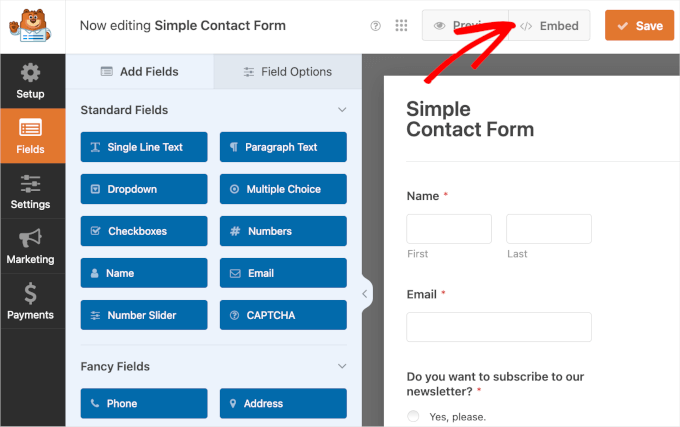
Once your form is prepared, click the 'Embed' button within the form builder to add it to a web page using the WPForms block.
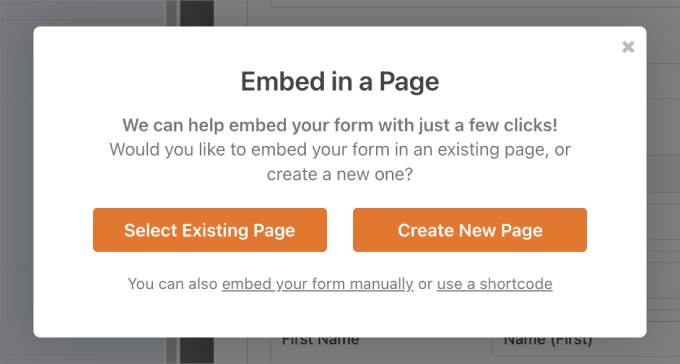
A dialog window will appear, allowing selection of existing pages or creation of new pages for form placement.
The 'Select Existing Page' option displays all available pages in a dropdown menu. The 'Create New Page' option provides a field for naming your new page.
After making your selection, click the 'Let's Go!' button to proceed.
You will be redirected to the block editor for your selected page.
Click the '+' button and search for the WPForms block in the available blocks.
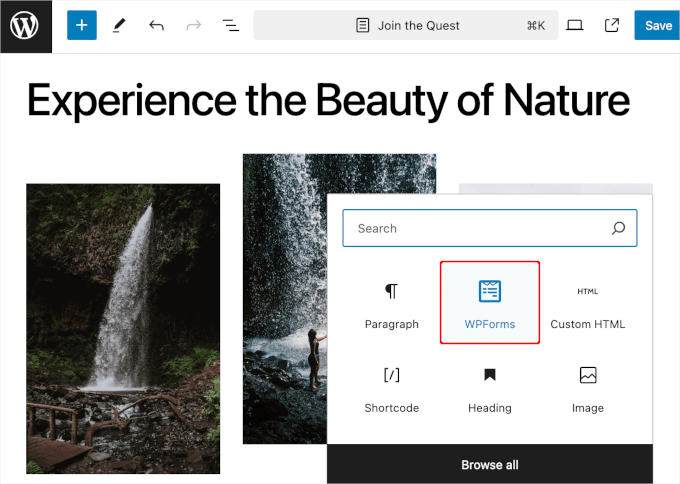
Within the WPForms block, use the dropdown menu to select the specific form you wish to embed.
After selection, the form will load within the content editor.
You can then adjust 'Form Settings' in the right-hand panel for customization.
By default, form titles are not displayed. You may enable the 'Form Title' option to provide contextual information to visitors. Form descriptions can also be activated if needed.
Additionally, you can apply styling themes to ensure the form matches your website's visual design.
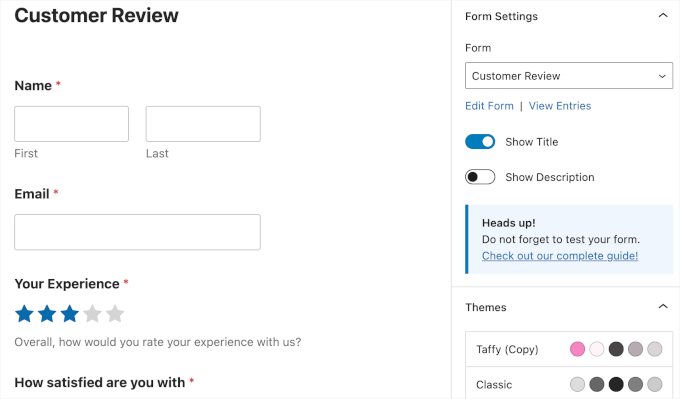
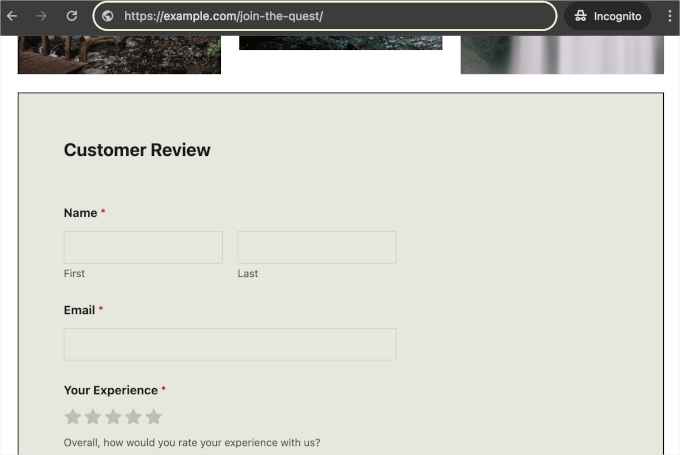
When satisfied with the form's appearance, click 'Save' to complete the process.
This completes the implementation using the WPForms block method.
Implementing WPForms Through Shortcodes
Shortcodes provide an alternative method for WPForms implementation.
Navigate to WPForms » All Forms and locate the 'Shortcode' column corresponding to each form.
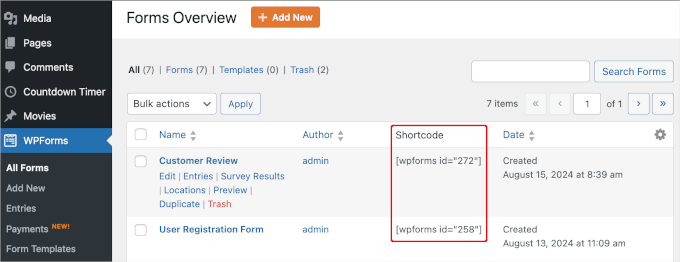
Copy the form's shortcode from this column for implementation.