Two Effective Methods for Monitoring Search Analytics in WordPress
By Editorial Team |
Do you create content for your website without a clear understanding of what your visitors are seeking? This is a frequent challenge for many WordPress site administrators. You invest effort into publishing, but measuring its true impact can be difficult.
Implementing search analytics can provide significant advantages.
By analyzing what users search for, which content receives the most attention, and identifying potential opportunities, you can develop material that genuinely resonates with your audience. This approach typically leads to improved engagement and more favorable outcomes.
A notable benefit is that configuring search analytics in WordPress is often simpler than anticipated.
This guide presents two straightforward approaches to establish this functionality. Upon completion, you will possess the necessary information to produce content that appeals to your visitors.
Understanding Search Analytics in WordPress
In essence, WordPress search analytics involves monitoring user search behavior both within your website and through external search engines to gain insights into their interests and actions. This process helps you comprehend how individuals discover your content, what they seek after arriving on your site, and areas where you can enhance the overall experience.
This guide will examine two primary categories:internal search analytics and external search analytics.
1. Internal Search Analytics
This category reveals what visitors search for while navigating your website. It can assist in identifying content deficiencies and better serving your audience.
Examples of internal search analytics include:
- Search Terms: Observe the exact phrases users enter into the search field. Are they seeking particular products, articles, or solutions to common inquiries?
- Search Frequency: Monitor how often specific search phrases are used to determine the most popular keywords among your visitors.
- Search Refinement Rate: Track how frequently users modify their search queries. A high refinement rate may suggest that initial search results are not adequately meeting their requirements.
2. External Search Analytics
This category provides information about how users locate your site through search engines such as Google. These insights are valuable because they help you understand what people are searching for beyond your website. Consequently, you can optimize your content to achieve better positioning in search results.
Key metrics for external search analytics include:
- Top Performing Pages: Determine which pages attract the most organic traffic. Are your product pages or blog posts receiving the expected level of attention?
- Organic Search Keywords: Identify which keywords direct visitors to your site from search engines. Are users finding your blog posts, product pages, or landing pages?
- Ranking Position: Monitor how your keywords perform in search engine rankings. Are your target keywords improving their positions over time?
Collectively, internal and external search analytics offer a comprehensive perspective on audience behavior—from their on-site searches to their initial discovery methods.
With this information, you can uncover content opportunities, refine your SEO approach, and expand your traffic in a strategic manner.
The Importance of Tracking Search Analytics
Monitoring your search analytics provides a clear understanding of how visitors interact with your WordPress site and how they discover it. The most apparent reason is to enhance user experience. Recognizing common search terms on your site enables you to improve navigation and make your content more accessible.
Additional reasons to track search analytics include:
- Understanding user intent. By observing what people search for on your site, you can comprehend their needs and objectives. This assists in providing appropriate content or products that align with their expectations.
- Optimizing Content Strategy: You can identify content gaps or discover new topics to address. This helps you concentrate your efforts on material that truly engages your audience.
- Improving SEO: Understanding which keywords attract visitors from search engines allows you to adjust your SEO strategy. You can optimize for those keywords and attract additional traffic.
- Increasing Engagement: By meeting visitor needs with relevant content and a seamless search experience, they are more likely to remain longer, explore additional pages, and return in the future.
Overall, consistently tracking search trends helps you evaluate the impact of your content updates and WordPress SEO initiatives. This enables you to modify strategies as necessary.
With that established, we will demonstrate how to view internal and external search analytics in WordPress.
Here is a brief summary of the topics covered in this tutorial:
- Method 1: How to View Internal Search Analytics in WordPress
- Method 2: How to View External Search Analytics in WordPress
- 3 Professional Tips for Utilizing Your Search Analytics
- Frequently Asked Questions: How to View Search Analytics in WordPress
- Additional WordPress Analytics Resources
Let's begin.
Method 1: How to View Internal Search Analytics in WordPress
If you wish to gain valuable insights into what your visitors search for while on your site, this method utilizing a search plugin will assist you in achieving that objective.
Many experienced developers consider SearchWP to be a comprehensive search solution for WordPress, known for its user-friendly interface.
Numerous WordPress professionals have reported significant improvements in search functionality after implementing this plugin. Users can typically locate desired information more quickly, resulting in a smoother experience and enhanced engagement.
Step 1: Install and Activate the Search Plugin
First, you need to install and activate your chosen search plugin. Visit the plugin's official website and obtain the installation file.
After completing this step, navigate to the 'Downloads' section in your plugin account.
Next, select the download option to save the plugin file to your computer.
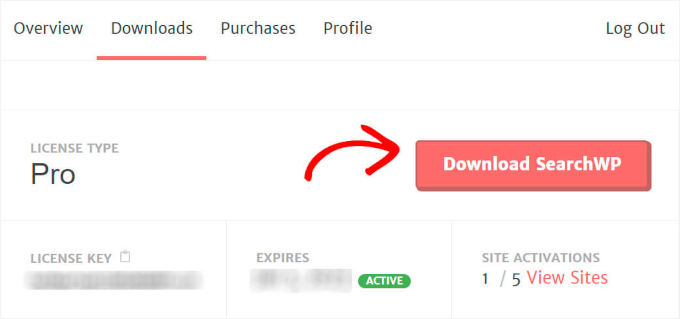
While the plugin downloads, remember to copy your license key. You will need this shortly to activate the plugin.
Proceed to your WordPress administration area and upload the plugin zip file.
If you are unfamiliar with this process, consult standard documentation on WordPress plugin installation.
Once the search plugin is installed and activated, enter your license key.
To accomplish this, navigate to the plugin's settings page and locate the 'License Key' field. Paste your license key into this field and select the activation option.
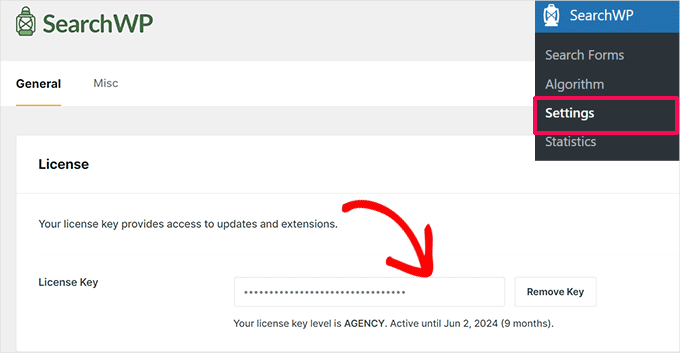
With the search plugin now operational, you are prepared to proceed to the next step.
Step 2: Install and Activate the Analytics Extension
While search plugins collect search data by default, analytics extensions provide advanced insights into visitor search behavior.
To begin, navigate to the plugin's extensions section from your WordPress administration area. Then select the installation option for the analytics extension.
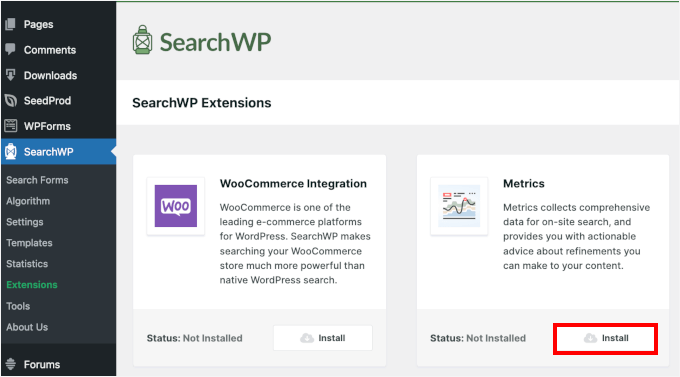
This will initiate the installation and activation process for the analytics extension.
Step 3: Examine Your Site Search Terms Data
Once the analytics extension is activated, review the search analytics information.
First, navigate to the plugin's analytics section.
Here, you will view all search data collected from your site visitors. Initially, no data will appear since you recently installed the plugin. However, from this point forward, every search conducted on your site will be recorded here.
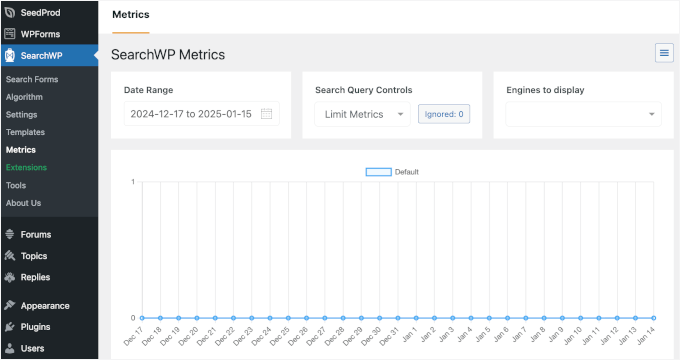
You may test the functionality by performing a search on your live site.
Afterward, return to the analytics section and verify if your search query appears in real time.
The search term you used should now be displayed accordingly.